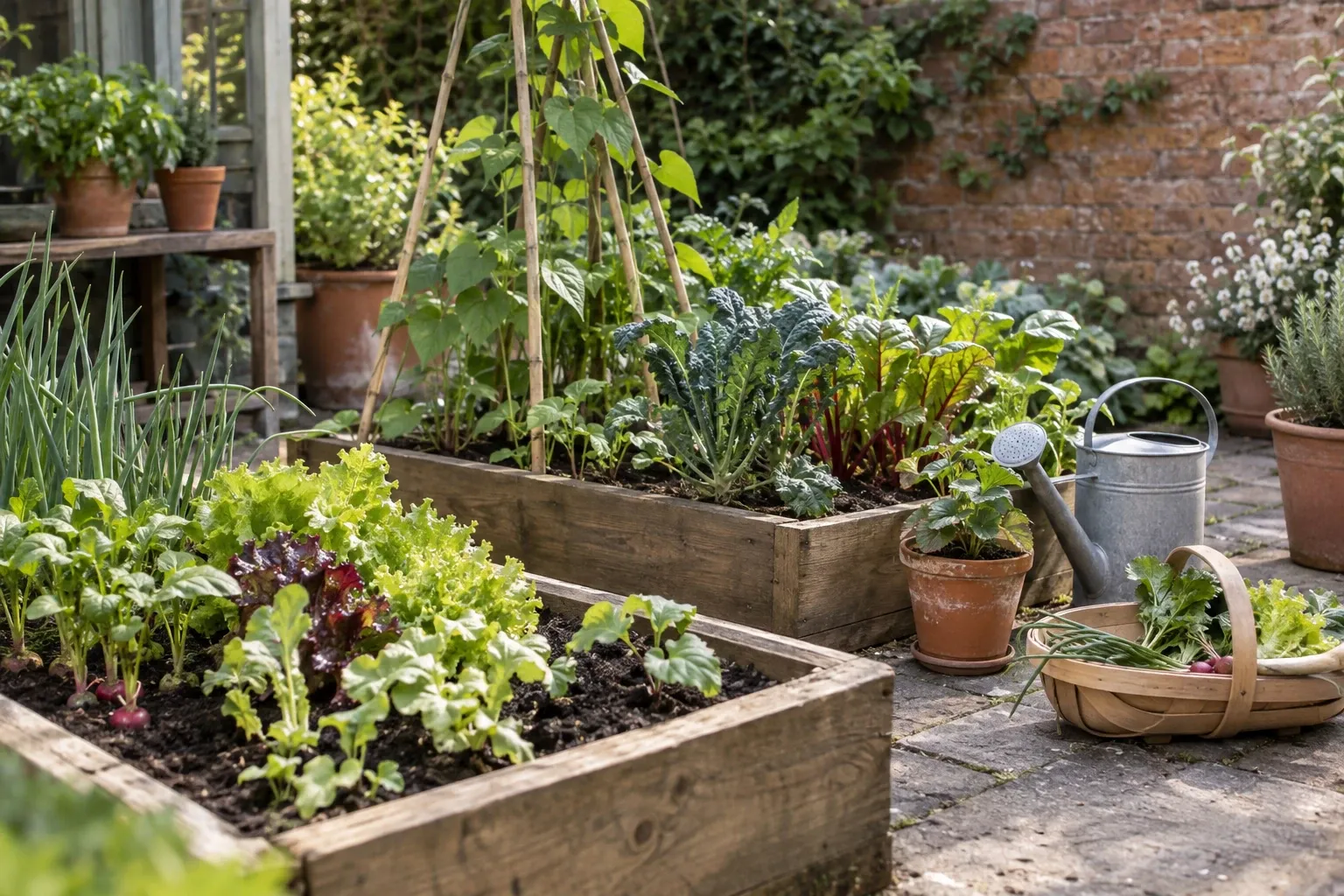
You want fresh, reliable veg without taking over the whole garden. The trick is to match the patch to your space, sun, soil and spare hours, then choose crops you’ll actually eat. This page walks you through siting and layout, the trade‑offs between ground beds, raised beds and pots, and a simple first‑year plan with UK frost caveats so your tomatoes, spuds and salads have the best chance to crop.
Where could a veg patch go in your garden?
Pick the brightest, most sheltered area you can spare. The Royal Horticultural Society notes that most vegetables prefer a sunny position; leafy crops will tolerate some shade, but fruiting plants do best with maximum sun and benefit from shelter from cold winds (RHS positioning guidance). Keep clear of big hedges and trees that cast shade and compete for moisture.
Spring planting needs a weather eye: the Met Office explains that late frosts still occur in late spring, with the average last frost usually earlier in southern/coastal areas and later in northern/high ground—and frosts can crop up in May and, in a few places, even June (Met Office frost overview). Use local forecasts to time planting or keep fleece handy.
What matters when you choose the spot?
- Sun and shelter: prioritise your warmest, stillest corner for fruiting veg like tomatoes, peppers and courgettes; put shade‑tolerant salads where light is dappled. This mirrors the RHS advice on sun and wind exposure.
- Drainage and access: avoid waterlogged ground; plan paths you can walk in all weathers without trampling beds. The no‑dig layout works well at ground level and in raised beds.
- Time and upkeep: choose a layout you can weed and water quickly. Narrow beds or pots you can reach from all sides save time.
Ground beds, raised beds or pots?
| Option | Best for | Pros | Watch‑outs |
|---|---|---|---|
| Ground‑level beds | Most gardens with workable soil | Cheapest to start; plants can root deeply; suits no‑dig | Needs paths; poor drainage on heavy clay unless improved |
| Raised beds | Heavy or compacted soils; defined layouts | Drain and warm quicker; neat edges; easy access | Materials cost; need filling; can dry faster in summer |
| Containers and grow bags | Yards, patios, balconies | Fits anywhere; move for sun; fewer weeds | Frequent watering/feeding; limited crop size |
If your soil is heavy or the lawn dominates the only sunny patch, raised beds are a fast route to organised growing—see how to set up raised beds for a first veg patch. If your space is all hard surfaces, build a crop list around pots—here’s how to make a vegetable garden out of pots.
Build the patch without tearing up the garden
No‑dig suits UK home gardens because it protects soil life and saves effort. The RHS describes starting by laying overlapping cardboard on grass or weedy ground and adding a 10–15 cm layer of organic mulch on top; you can plant into it with well‑rotted material, and beds around 1.2 m wide with ~45 cm paths are easy to work (RHS no‑dig method). If your plot is wet or clay‑heavy, raised beds still help because they drain better, a benefit the RHS highlights in its no‑dig guidance.
Prefer to stay container‑based this year? Start with large pots for potatoes, beans, courgettes and salad mixes, then add canes or frames for climbers—our guide to making a vegetable garden out of pots covers sizes, compost and watering.
What to grow first—and when
- Plant to your plate: potatoes, quick salads, French/broad beans and courgettes will boost confidence. If you fancy tomatoes, give them the sunniest, stillest spot and follow our step‑by‑step to grow tomatoes from the first sowing to harvest.
- Time outdoor planting by frost risk: the Met Office confirms late frosts remain possible into May in many areas, so wait to plant tender crops until your local nights stay mild, or harden off and cover with fleece or cloches on chilly forecasts.
- Rotate from the start: even a simple three‑ or four‑bed plan helps reduce soil‑borne problems and spreads nutrient demand. The RHS sets out why rotation limits pests like clubroot and how to group crops and move them yearly (RHS crop rotation). Potatoes are a good “first year” crop in new ground—dig or plant into no‑dig mulch and then follow with a different family next season; see how to grow potatoes in beds or containers.
If you like the lower‑effort route, our primer on starting a no‑dig vegetable bed shows materials and timings that match a typical UK spring.
A simple first‑season plan
- Map your sunniest 3–4 m² and mark 1–2 beds at ~1.2 m width with paths you can walk year‑round (RHS suggests this width for reach and reduced compaction; RHS no‑dig method).
- Build beds the no‑dig way (cardboard + 10–15 cm well‑rotted compost or mulch) or fill raised frames; water to settle.
- Plant tough, cool‑tolerant choices first (salads, peas, beans). Keep tender crops in pots under cover until frost risk passes locally (use Met Office forecasts; Met Office frost overview).
- Mulch bare spots, label beds, and note which crop family goes where so you can rotate next year (how‑to from the RHS on rotation).
How to tell it’s working—and what to tweak
- Plants are growing cleanly with fewer weeds: no‑dig mulches usually cut weeding and protect soil structure, according to the RHS.
- Beds stay reachable in wet spells: if you can weed without stepping on soil, your widths and paths are right (RHS suggests ~1.2 m beds and ~45 cm paths; RHS no‑dig method).
- Harvests arrive before bolting or frost: keep an eye on regional frost risk and heat waves to move sowing dates a week earlier or later next season; the Met Office explains why late frosts still bite and why timing varies across the UK.
When you’re ready to expand, add another bed and bring in rotation as set out by the RHS rotation guide, or keep adding large containers and repeat the same family only after a compost refresh. This way, your veg patch grows with your time and space—while the harvest grows with it.