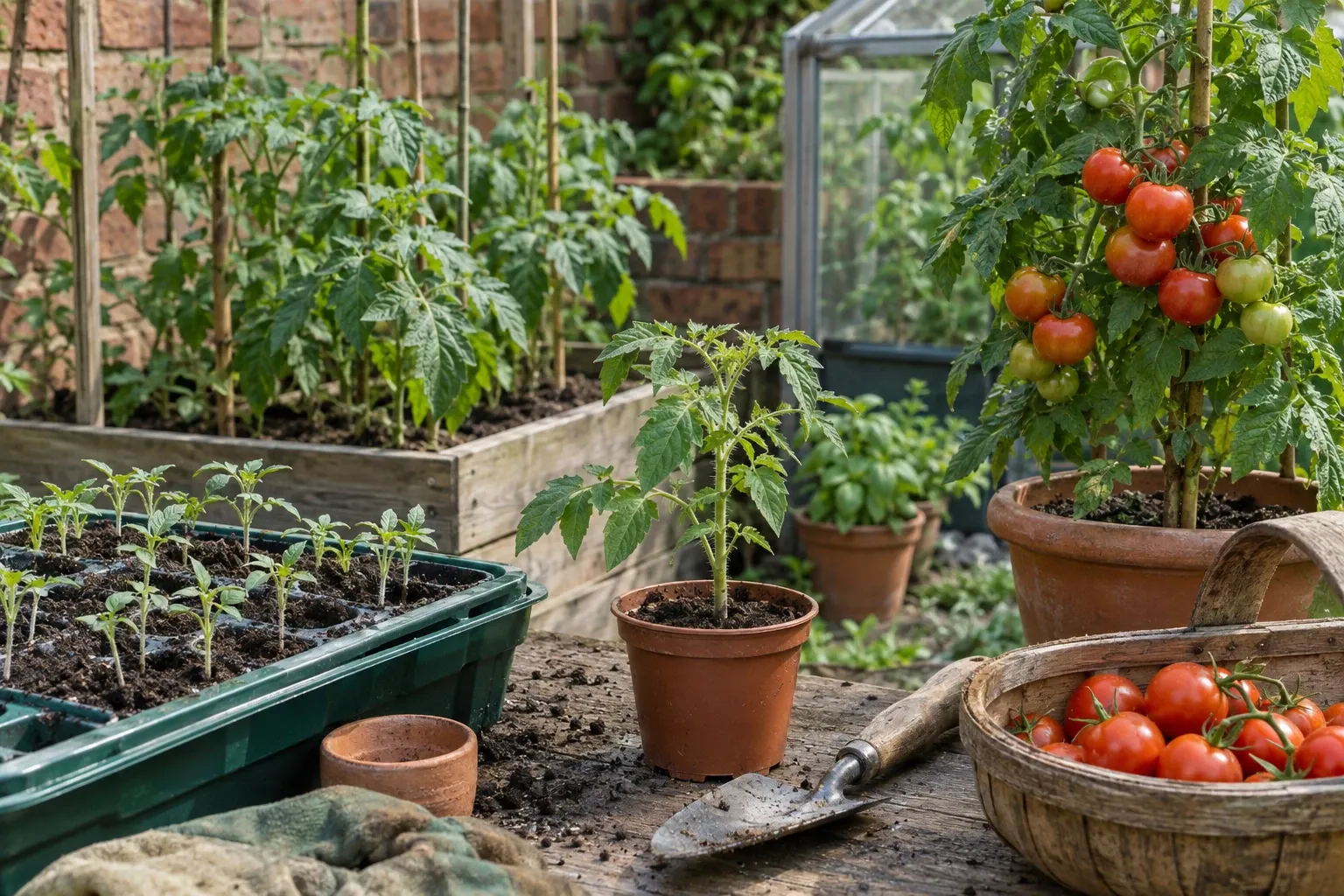
Tomatoes are tender, hungry plants, but with the right timing and simple routines you can raise them from your first sowing to ripe fruit on a UK patio, bed or allotment. This guide sets out what to grow (cordon or bush), when to start seeds for outdoor or greenhouse crops, and how to water, feed and support plants so they fruit before autumn draws in. Regional frost notes and small-space options are built in, with practical steps you can follow today.
What do you want from your tomato crop?
- Earlier fruit or a longer season? A greenhouse or polytunnel gives extra warmth and shelter so plants establish sooner and crop for longer, especially in cooler regions, but they still need steady watering and ventilation, and support for tall cordon types, as outlined in the Royal Horticultural Society’s tomato guide (RHS guide).
- Low‑maintenance pots on a balcony? Choose compact bush or trailing cherries for containers; they’re naturally shorter and don’t need side‑shoot removal, which the same RHS guide highlights.
If you’re setting up food-growing space from scratch, plan sun, shelter and watering access first; see how to make room for a productive vegetable patch for siting and layout basics you can scale to beds or containers.
Cordon or bush: which fits your space and time?
- Cordon (indeterminate): one main stem trained up a cane or string, with side shoots removed. Best for steady harvests of medium fruits and for greenhouses. Expect regular tying in and weekly side‑shooting. The RHS guide explains the growth habits and support needs.
- Bush (determinate) and tumbling: naturally branching, stop at a set height, no side‑shoot removal required; ideal for pots, troughs and hanging baskets. Garden Organic also notes their suitability for containers and simpler training (Garden Organic).
When to sow and plant in the UK
- Sowing window: Start seeds indoors from late February to April for greenhouse crops, and from late March into April for outdoor crops, so you aren’t nursing leggy plants for months. Young, well‑rooted plants go to final positions in early summer once nights are reliably mild, which the RHS guide places at about 16°C.
- Frost caveat: Planting outside waits until your local last frost has passed. The Met Office shows a clear north–south and altitude pattern, with many northern and higher sites seeing last frosts well into May and a few into June (Met Office). Harden off plants gradually for 10–14 days before they live outdoors.
Beds, growbags or pots?
- Pots: One plant per 30–45 cm pot; use a peat‑free, rich compost and add a stake at planting. This sizing and container approach are set out in the RHS guide.
- Growbags: Two plants per standard bag; fold to deepen the compost and stake firmly. Again, see the RHS guide.
- Beds and borders: Improve soil with garden compost, space cordons so leaves dry quickly, and arrange canes or strings before planting. Garden Organic recommends steady moisture and regular feeding throughout growth.
If you prefer patio harvests from many small containers, see how to make a vegetable garden out of pots and pick compact cherry types.
Step‑by‑step: from first sowing to first pick
- Sow indoors, 1 seed per small pot, warm and bright.
- Use peat‑free seed compost and gentle bottom warmth if your windowsill is cool. Keep compost just moist, never sodden. The RHS’ general watering guidance for edibles stresses targeting moisture to the rooting zone and avoiding waste (RHS watering advice).
- Pot on and grow sturdy seedlings.
- Move to 7–9 cm pots when true leaves appear. Keep light strong, turn plants weekly, and avoid overfeeding at this stage; Garden Organic advises potting on promptly and maintaining even moisture.
- Harden off, then plant into final positions.
- Introduce outdoor conditions over 10–14 days, then plant after frost risk with supports already in. The Met Office notes late frosts are commoner in northern and higher areas into May, sometimes June, so adjust dates accordingly.
- Train and tie in (cordons) or let bushes fill their space.
- For cordons, remove side shoots where they arise in leaf axils and tie the main stem regularly. Bush and tumbling types do not need side‑shooting, as set out by the RHS guide.
- Water and feed for fruit, not leaf stress.
- Keep compost or soil evenly moist; deep, regular watering is better than splashes. Start with a balanced liquid feed, then switch to a high‑potassium tomato feed once the first fruits set, as advised by the RHS tomato profile (RHS plant profile).
- Pick promptly and keep plants clean.
- Harvest at full colour and firm‑ripe; remove yellowing foliage to improve airflow. Garden Organic recommends removing leaves that shade lower trusses and maintaining steady moisture to reduce disorders.
Common UK pitfalls and how to avoid them
- Late frost scorch on outdoor plants: hold back planting until local nights are mild; fleece cold snaps. The regional pattern of late frosts is explained by the Met Office.
- Blossom end rot and fruit splitting: both are linked to uneven watering; the RHS’ edible watering page underlines keeping moisture steady at the root zone. Switching to high‑potassium feed at fruit set also supports reliable cropping.
- Tall, leafy plants with few fruits: reduce nitrogen‑rich feeds once plants are established and prioritise potassium after fruit set, per the RHS plant profile.
Small garden shortcuts
- Choose compact cherries such as ‘Tumbling Tom’ or modern dwarfs for pots and baskets; they crop well in limited compost and avoid fiddly training, as noted in the RHS guide.
- Group containers so one deep watering reaches all, and use mulch to slow evaporation; these are consistent with the RHS watering advice.
If you’re also eyeing reliable staples, try to grow potatoes in beds or containers to spread harvests through the season.
How to tell it’s working
- Plants are stocky, deep green and tied securely; flowers appear on short trusses.
- The top few centimetres of compost dry between waterings but the root zone stays evenly moist.
- After switching to tomato feed at fruit set, trusses swell steadily and colour up before autumn. If that’s not happening, revisit watering regularity and feeding balance using the RHS plant profile as your reference.