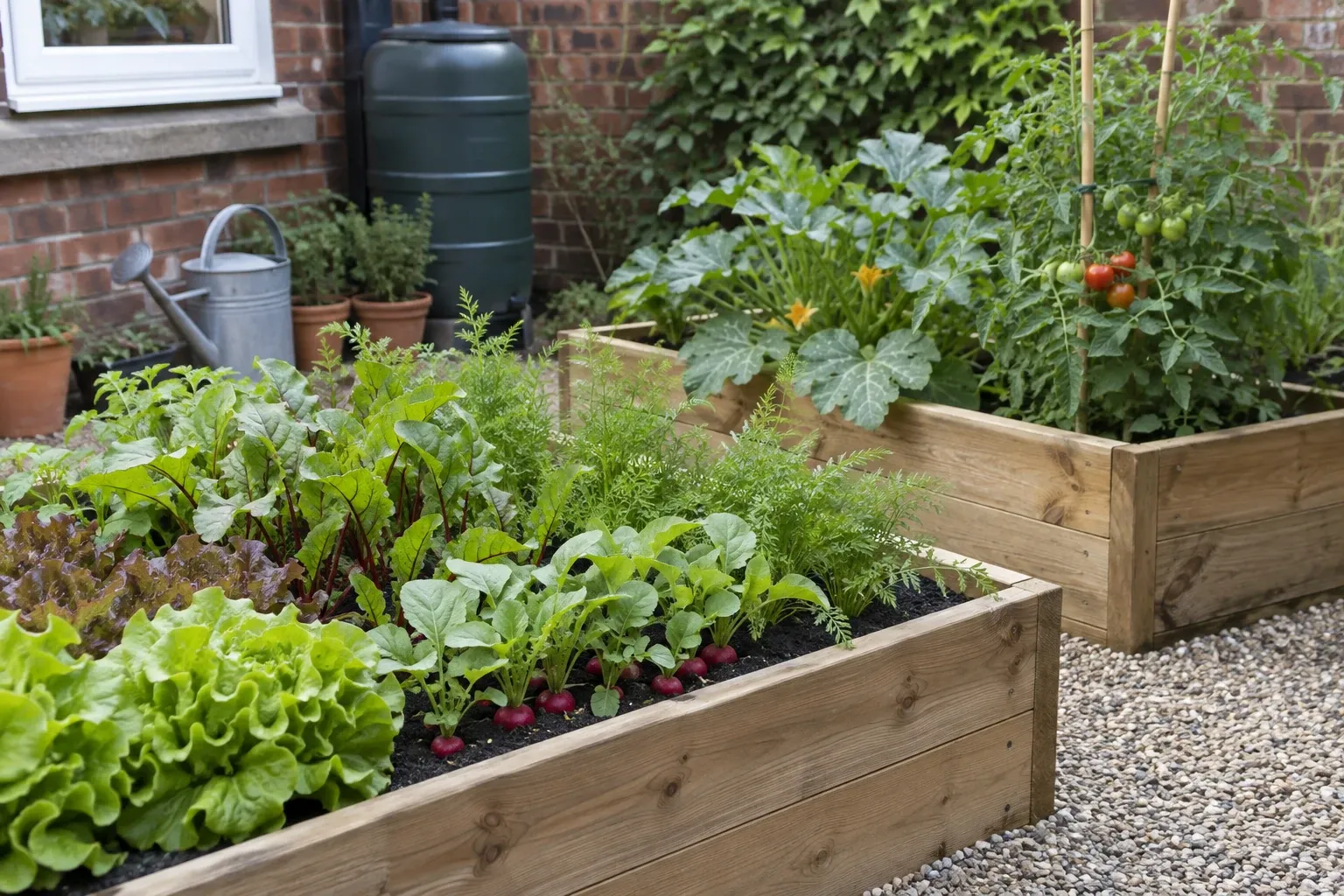
Raised beds make vegetable growing simpler on heavy clay, stony ground or tiny patios. They warm up faster in spring, drain better after rain and keep soil loose because you never tread on them. Below, you’ll choose a good position, pick sizes you can reach, select safe materials, prepare drainage and fill with a reliable peat‑free mix. There’s also clear guidance if you’re concerned about contaminated soil, plus a checklist to confirm your beds are ready to plant.
Where should your raised beds go?
- Sun and aspect: most vegetables need a sunny, open spot; run longer beds roughly north–south for even light, and keep clear of overhanging trees, says the Royal Horticultural Society (RHS raised‑bed how‑to).
- Drainage: build on free‑draining ground where possible. If you must site a bed on paving or concrete, ensure the container or base has generous drainage holes to avoid waterlogging, per the same RHS guide.
If you’re deciding the overall layout for crops, start with a simple plan for sunlight, access and crop rotation in your space: see plan a first UK vegetable garden.
How wide and how deep should the bed be?
- Reachable width: beds should be narrow enough to reach the middle without stepping in. RHS no‑dig guidance suggests about 1.2 m as a comfortable width for access from both sides (RHS no‑dig beds).
- Maximum width: the RHS raised‑bed how‑to notes that widths under 1.5 m usually let you reach the centre without compacting the soil.
- Depth: allow about 30 cm for salads, strawberries and shallow‑rooted crops, and 45 cm or more for most other plants, according to the same RHS page.
- Paths: leave at least 45 cm for a wheelbarrow and around 1 m if wheelchair access is needed, says the RHS guide.
Which materials are safe and durable?
- Pressure‑treated timber: modern treated softwood sleepers and new treated boards are fine for edible crops; lining with plastic is optional if you want extra caution, says RHS advice (RHS feature on veg in raised beds). The RHS also lists pressure‑treated timber as a durable, popular choice.
- Avoid creosote sleepers: using old creosote‑impregnated railway sleepers in gardens is no longer permitted because of frequent skin contact risks, notes the RHS.
- Masonry or recycled plastic: bricks, stone and recycled‑plastic sleepers are long‑lasting alternatives; line masonry if you need to stop lime from mortar affecting ericaceous plants.
What goes under the bed?
- On soil: remove turf where present and lightly fork the base to help roots into the ground below. For deep beds above about 50 cm, place subsoil or rubble in the base to improve drainage and save topsoil, then lay inverted turves to rot down, per RHS construction steps.
- On paving: ensure there are drainage holes if using a box or tray, and adjust the mix for free drainage, as the RHS recommends.
How do you fill a raised bed for vegetables?
A reliable, peat‑free mix is easy to make and suits most veg:
- Base recipe: the RHS suggests a general mixture of seven parts topsoil, three parts organic matter (garden compost, leafmould or well‑rotted manure) and two parts sharp sand for raised beds.
- Manure hygiene: when using manures, follow UK food‑safety guidance to minimise contamination risks to ready‑to‑eat crops (Managing Farm Manures for Food Safety).
- Saving fill: use subsoil or inverted turves in the bottom of deep beds as noted by the RHS; keep the top 25–30 cm as the best mix for rooting.
If you’re filling a bed for tomatoes, choose a warm, sheltered spot and keep the top layer rich and free‑draining; see how to grow tomatoes from sowing to harvest. For early and maincrop spuds, ensure depth for earthing up or choose containers; read how to grow potatoes in beds or containers.
What if you’re worried about contaminants?
- When past land uses are uncertain (old industrial sites, near busy roads or made ground), UK public‑health guidance explains how to reduce exposure to chemical contaminants in soils, including using raised beds with clean media and good hygiene (UKHSA advice on potentially contaminated residential land).
- Councils echo this: if you’re at all worried about soil quality, grow edibles in pots or raised beds filled with shop‑bought compost and topsoil blends (Royal Borough of Kensington and Chelsea).
Step‑by‑step: build and plant your first raised bed
- Choose the spot
- Full sun if possible; avoid tree shade and wind tunnels. Check you can reach all parts without stepping in.
- Mark out and size
- Keep width around 1.2 m for access from both sides, and lengths you can walk around easily. Leave 45 cm+ paths (1 m if needed for wheels).
- Select materials
- Use pressure‑treated softwood sleepers or durable boards; avoid old creosote sleepers. Consider masonry or recycled plastic if timber longevity or honey fungus is a concern.
- Prepare the base
- On soil: lift turf, loosen subsoil, and for deeper beds add a drainage layer of subsoil/rubble with inverted turves on top.
- On paving: provide drainage holes and set the bed level.
- Mix and fill
- Blend seven parts topsoil, three parts organic matter and two parts sharp sand (peat‑free). Firm lightly and water to settle to about 5 cm below the rim.
- Plant and protect
- Start with easy crops for the season, add slug protection as needed, and use covers in cold snaps. Rotate crops between beds year to year.
If you’re still working out what to grow where, see how to plan a first UK vegetable garden.
Checklist: is your bed ready?
- Gets at least 6 hours of sun in spring and summer.
- You can reach the centre from both sides without stepping in.
- Paths are wide and firm enough for you and your tools.
- Timber or walls are sound and safe; no creosote sleepers.
- Drainage works: water doesn’t pond after heavy rain.
- Top 25–30 cm is a fertile, peat‑free mix; manures are well rotted and used with food‑safety care.
- You’ve labelled crops and planned a simple rotation for the year.
Sources used: RHS guidance on placement, sizes, construction and mixes (RHS raised‑bed how‑to; RHS feature on veg in raised beds), and UK public‑health advice on gardening where contamination is possible, with council guidance for residents.