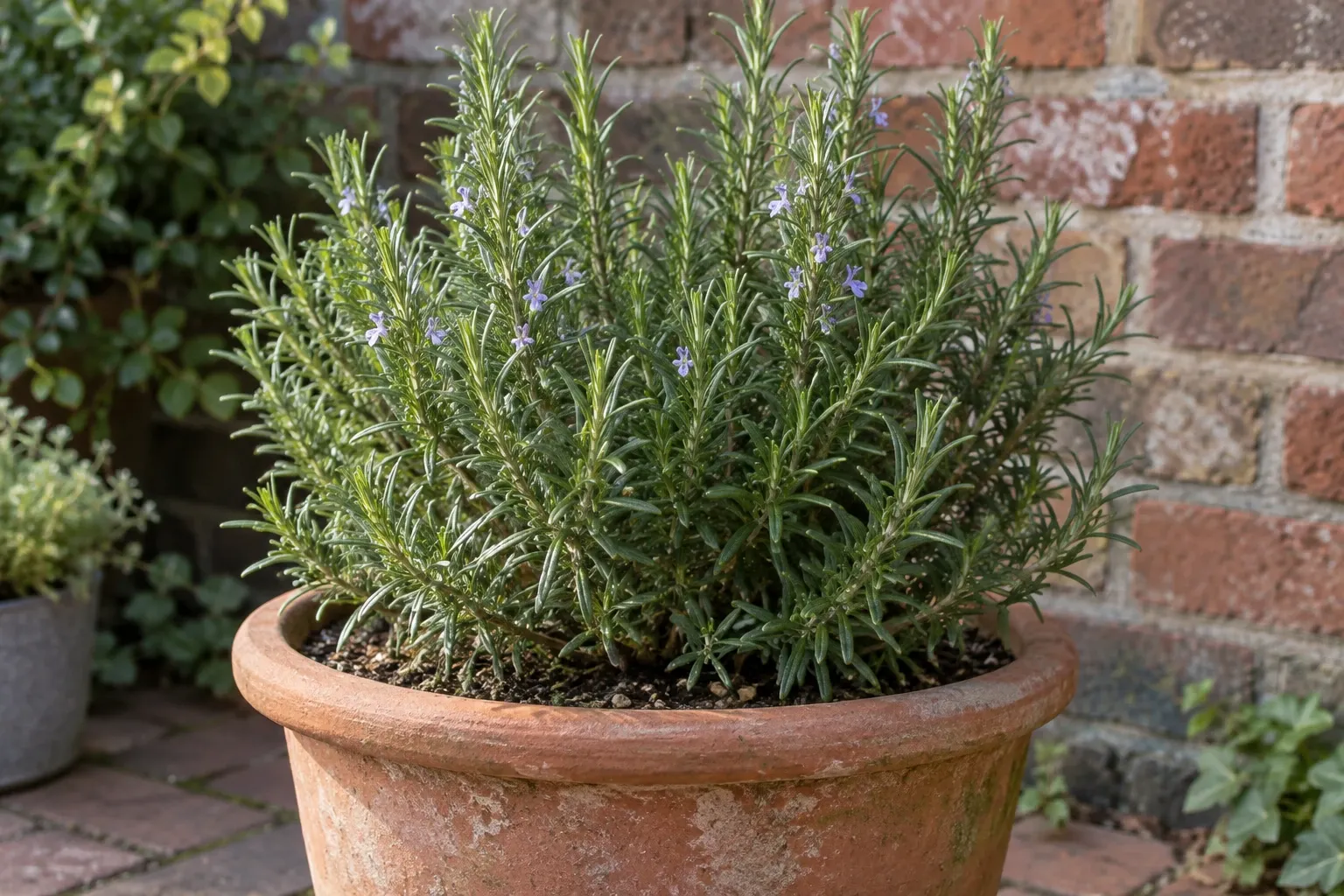
Rosemary is an evergreen, aromatic herb, but it does not suit every corner of a garden. A sunny, sheltered position and soil that drains freely matter more than rich compost or frequent feeding. In a small garden, a pot can make those conditions easier to provide; in a border, a raised spot can help keep roots out of winter wet.
Where will rosemary grow well?
Rosemary suits a sunny, sheltered place where water does not linger around its roots. That makes it a useful herb for a warm border, a raised bed, a gravel garden or a patio container. The RHS plant profile recommends full sun and well-drained soil, and describes rosemary forms ranging from trailing to upright, with heights listed from 15cm to 2m. Check the label for the mature habit of a particular cultivar before placing it beside a path or other plants: a spreading form may spill over an edge, while an upright one takes a different shape.
The main difficulty in many UK gardens is not a lack of feeding but soil that stays cold and wet, especially through winter. If your garden has heavy soil, choose a raised position or grow the plant in a container rather than setting it in a waterlogged spot. Rosemary is drought tolerant once established, but a new plant needs attention during dry spells in its first year. Think about the whole year when choosing a location: a sunny wall can offer shelter, but a pot against the house may still need moving if winter weather turns severe.
Which growing option fits your space?
A border is convenient if you have free-draining soil and room for a lasting shrub. Give plants at least 45cm of space from their neighbours, as the RHS recommends, and leave access to snip sprigs without brushing against other plants. If you are laying out a new productive space, include herbs where they will be easy to reach; the first steps for planning a vegetable garden can help you think through how paths, beds and containers fit together.
A pot is the more adaptable choice for a small patio, a garden with heavy soil or a site where you want to shift the plant to shelter. The RHS rosemary growing guide recommends a container at least 30cm wide and deep, with plenty of drainage holes. Use a peat-free, soil-based compost and mix in horticultural grit to improve drainage; the RHS advises that grit can make up as much as 25% of the mix by volume. Do not let the pot sit in a saucer full of water. The RHS’s advice on planting Mediterranean herbs in a container also stresses a sunny, sheltered position and free drainage.
A raised bed can be a middle ground if the surrounding garden soil drains poorly but you want rosemary to grow in the ground. Choose the warmest, sunniest section, and avoid burying the plant too deeply when setting it in. If you are also planning a compact crop area, leave space for larger plants and easy access; growing potatoes in beds or containers can help you compare how different crops use a small plot.
When should you plant and how do you get it established?
Spring is the best time to plant rosemary, once the soil is beginning to warm, although the RHS says plants can potentially be planted at other times of year. Planting in spring gives a young shrub time to settle before winter. Choose a healthy plant with firm stems and no signs of damage, then set it so the top of the root system is only lightly covered. Water it in, and keep an eye on it during dry weather while it establishes.
You can grow rosemary from seed, but it is a slower option if your aim is to pick leaves soon. The RHS notes that seed-grown plants can take several years to become large enough to harvest. A bought young plant or a cutting is a more direct route. If you already have a rosemary plant, softwood cuttings can be taken from new growth in late spring or summer. Cuttings produce plants like the parent, so they are useful when you want to keep a chosen form.
For a pot-grown plant, check that water runs freely through the drainage holes after watering. For one planted in a bed, look at the soil after rain: if it remains saturated, consider moving a young plant to a raised or container position before it becomes established. Keep the surrounding soil relatively lean rather than trying to make it rich; rosemary can grow in poor to moderately fertile soil, provided drainage is good.
How do you maintain and harvest rosemary?
Once established in the ground, rosemary generally needs little extra watering. Water new plants during dry spells in their first year, and give container plants extra water when the compost dries during hot, dry weather. The aim is to avoid both prolonged dryness in a pot and persistently wet roots. Rosemary in the ground does not need feeding as a routine; a container plant that has been in the same pot for more than a year may benefit from a general-purpose granular feed in late spring or early summer, according to the RHS.
Trim lightly after flowering to keep the plant neat and encourage fresh growth. Do not cut hard into old wood: rosemary often responds poorly to severe pruning. If a shrub has become bare and woody, take cuttings to raise replacements rather than relying on a deep cut to revive it. You can harvest sprigs throughout the year, although the RHS notes that late-spring and summer growth has the best flavour. Take only what you need and snip in a way that preserves the plant’s shape.
What should you check before winter?
Rosemary is hardy in much of the UK, but that does not make every plant or position equally safe. The RHS says well-established plants may survive temperatures as low as -8°C, while harsh frosts and cold winds can still cause damage. Young plants, exposed gardens and colder parts of the UK need more caution. If a severe cold spell is forecast, cover an in-ground plant temporarily with fleece or hessian.
Potted rosemary is more exposed because cold reaches the roots through the sides of the container. Group pots together, wrap the pot for insulation or move it to a sheltered spot such as a porch or the lee of a wall. During prolonged wet weather, shelter can also help keep the compost from becoming saturated. Check the plant after winter: firm, healthy shoots and free-draining compost are better signs than a fixed calendar date for when it should be growing again.
A rosemary plant is in a suitable place if it receives sun, grows without sitting in wet compost and can be reached for light trimming and picking. If it repeatedly suffers through winter, change the drainage or shelter rather than adding more feed. In a small garden, a well-drained pot may be the simplest way to provide those conditions.