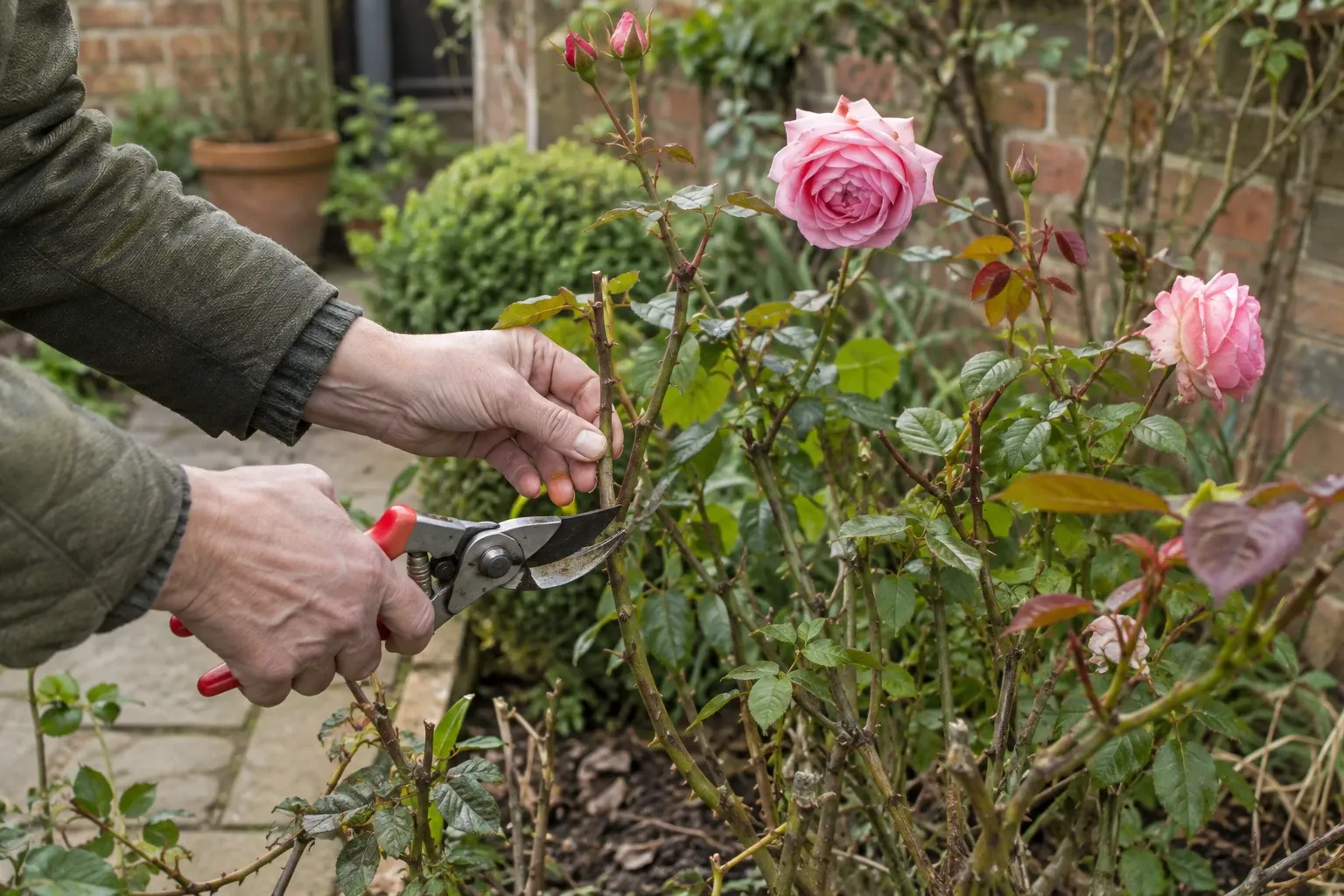
You may have heard “prune roses in March”, then watched a TV gardener cut in January or July. Both can be right. In the UK, most bush roses are pruned in late winter as growth starts, while ramblers are usually tackled just after they finish flowering. Climbing roses sit somewhere between. Below, you’ll match your plant to its best pruning window, allow for your region and get a simple plan for clean, confident cuts that set up strong flowering.
How do I know the right time to prune my roses?
- Identify the type: bush (modern shrub, hybrid tea, floribunda and patio), climbing, or rambling. Most bush roses are pruned in late winter as growth restarts, while ramblers are usually pruned after flowering and climbers are pruned in winter with spent shoots shortened. The Royal Horticultural Society (RHS) sets out the main timings for each group in its rose‑by‑rose guides, including late winter (February–March) for most bush types and winter pruning for climbers, with ramblers pruned after flowering or renovated between late autumn and late winter (RHS general tips; RHS climbing roses; RHS rambling roses).
- Allow for your region: spring growth can begin earlier in the south and later in the north, so late winter in Cornwall may be January–February, while in northern or colder areas it may be March. Gardeners’ World notes that the best time for most roses is late winter to early spring, around the start of new growth, with earlier starts in the south and later further north (BBC Gardeners’ World Magazine).
Start and care for a garden if you’re setting up beds and need a seasonal frame to work within.
What should I look at before I pick a date?
- Flowering habit: once‑flowering ramblers set next year’s blooms on this year’s growth, so prune them just after flowering; repeat‑flowering bush and climbing roses respond to late‑winter pruning that stimulates new flowering shoots (RHS ramblers and climbers as above).
- Bud stage: a practical cue is swelling buds at the end of winter on bush roses; that’s your go‑signal to prune (RHS general tips).
- Weather and wind: in exposed sites, lightly shorten tall whippy stems in autumn to prevent wind‑rock, then do the main structural cuts at the proper seasonal window.
UK pruning windows compared
| Rose type | Main pruning window (UK) | Light tidying | What you usually remove |
|---|---|---|---|
| Bush (modern: hybrid tea, floribunda, patio) | Late winter as growth restarts: often February in the south, March in colder/northern areas | Autumn shortening of very long stems if needed | Dead/diseased wood; one or two oldest stems; shorten remaining stems to outward buds to shape and renew flowering wood (RHS modern bush and RHS patio & miniatures) |
| Climbing roses | December–February, after flowering has finished | Summer deadheading; occasional shortening of over‑long sideshoots | Tie in new long canes; remove one or two oldest canes if congested; shorten flowered side shoots by two thirds of their length |
| Rambling roses | Immediately after flowering for routine pruning; renovation between late autumn and late winter if overgrown | Light shortening in autumn to prevent wind damage | After flowering, remove some of the flowered stems to the base and tie in new canes; in renovation keep up to six young vigorous stems and cut old woody branches to the ground |
| Shrub roses (traditional/shrubby types) | Once-flowering types: late summer after flowering; repeat-flowering types: late winter as growth resumes | Deadheading in summer | Generally light pruning to maintain a balanced framework of older wood and fresh growth (RHS shrub roses) |
How do I carry out the prune on my plant?
Follow this simple order for most roses, adjusting timing by type as above.
- Clean and prepare tools. Use sharp secateurs or loppers and stout gloves. Keep blades clean to reduce disease spread (RHS general tips). You can build a useful gardening toolkit if you’re starting from scratch.
- Remove the three D’s first: dead, diseased and damaged wood. Cut back to healthy tissue.
- Open the centre. Take out crossing or rubbing stems to improve airflow and reduce blackspot risk (RHS general tips).
- Make correct cuts. Cut no more than about 5 mm above an outward‑facing bud, with the cut sloping away from the bud so water does not sit on it.
- Shape by type.
- Bush roses: shorten remaining stems to outward buds to a balanced height that suits the plant’s vigour; many gardeners renew one or two of the oldest stems each year (RHS modern bush).
- Climbers: retain and tie in long main canes horizontally or fan‑shaped; shorten flowered side shoots by two thirds of their length; remove very old canes if the framework is congested (RHS climbing roses).
- Ramblers: after flowering, remove some or all flowered stems to the base and tie in this year’s new canes to replace them; for heavy renovation between late autumn and late winter, retain up to six young vigorous stems and cut old woody branches to ground level (RHS rambling roses).
Tip: Clear prunings and old leaves from around the base to reduce disease carry‑over; BBC Gardeners’ World notes this is good practice when tidying foliage in autumn (BBC Gardeners’ World Magazine).
What after‑care proves I chose the right week?
- Strong bud break within a few weeks as temperatures lift is a good sign. In March, established roses benefit from a granular rose feed as growth takes off; RHS month‑by‑month advice highlights feeding roses as they come into growth (RHS March trees & shrubs).
- Mulch 5 cm of garden compost around, keeping it off the stems, to conserve moisture and improve soil as the plant responds; this sits well with general RHS after‑pruning care, and you can turn prunings and leaves into mulch by learning to turn garden waste into compost.
- Through summer, deadhead repeat‑flowering types to prolong bloom, then return to the correct seasonal window next year based on your rose type.
If you’re beginning with roses as part of a new plot, you’ll find it easier to plan jobs and tackle pruning when you’ve sized up your space, soil and time using our guide to start and care for a garden.