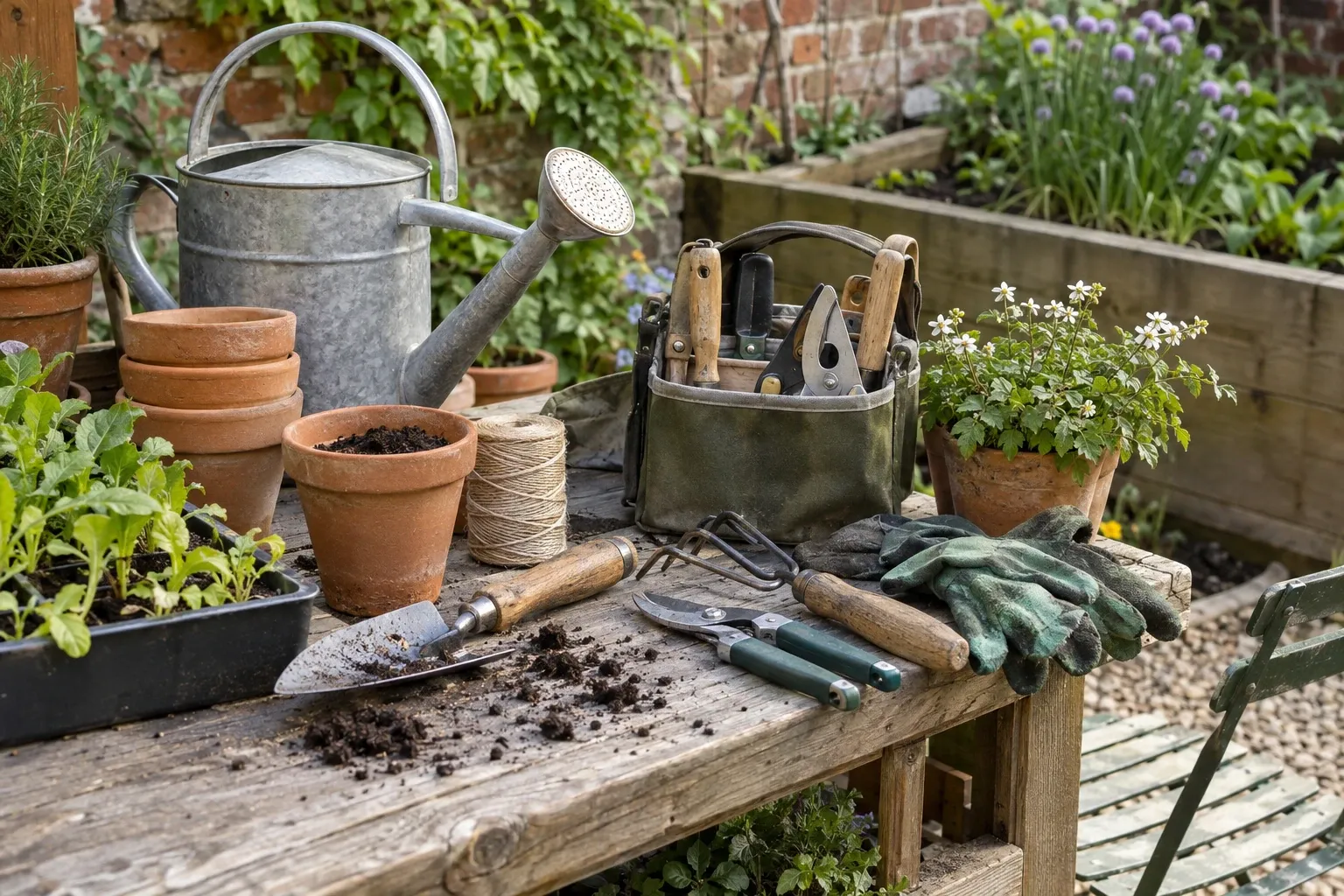
If you’re starting out with a small or medium UK garden, patio or raised beds, the choice of tools can feel overwhelming. The trick is to buy a few well‑made basics that fit your hands and height, then maintain them so they work smoothly for years. Below you’ll find criteria that help you choose, a simple starter list by task, and care and safety habits that keep both you and your plants in good shape.
What do you actually need to get started?
For a typical small UK garden, allotment starter plot or a few raised beds, a compact set does most jobs. Consumer group Which? suggests beginners will cover the bulk of routine work with gloves, a hand trowel and fork, a digging spade and fork, a rake or hoe, bypass secateurs and, for larger gardens, a wheelbarrow (Which? beginners’ list). If you’re still setting up beds and choosing plants, see how to start and care for a garden so your tools match the jobs ahead.
How do you judge a good tool in the shop?
- Fit and reach: Handles should let you work with a straight wrist and neutral back. Try full‑size tools in gloves and check you can lift and drive the head without twisting.
- Weight and balance: A slightly heavier, well‑balanced head often digs better than a very light one that bounces.
- Materials: Forged or welded steel heads stand up to UK soils; avoid thin pressings that flex. Wood handles are repairable; fibreglass resists damp sheds.
- Grips: Smooth, shaped grips help prevent blisters. If buying online, compare return policies so you can swap sizes.
- Spares and service: Secateurs with replaceable blades and springs are worth paying for because they’re easy to refresh later (RHS sharpening advice).
- Storage: If space is tight, prioritise a short list that hangs on a single rail; add later only when a job keeps recurring.
Which tool for which garden job?
| Common job | Essential tool(s) | Why this first? |
|---|---|---|
| Planting and potting on | Hand trowel; hand fork | Precise digging and root teasing in containers and raised beds. |
| Digging and lifting | Digging spade; digging fork | The fork loosens compacted UK soils; the spade moves and edges. |
| Weeding between plants | Hoe or hand weeder | Quick, low‑effort weed control in beds and veg rows. |
| Pruning and deadheading | Bypass secateurs | Clean cuts on live stems reduce damage and help healing. |
| Gathering leaves/levelling beds | Garden rake | Rakes debris and grades soil after cultivation. |
| Moving bulk materials (larger plots) | Wheelbarrow | Shifts compost, soil and prunings efficiently. |
The core mix above aligns with the compact starter set highlighted by a UK consumer review body for new gardeners.
Care and safe use: small habits that make tools last
- Clean after use: Knock off soil, then wipe metal parts. Cleaning blades that contact sap or soil helps limit pest and disease spread and keeps tools working smoothly, notes the RHS (RHS tool cleaning).
- Sharpen little and often: Sharp tools are safer and more efficient than blunt ones; the RHS shows simple methods with a diamond file or whetstone for secateurs, knives and hoes.
- Dry storage: Hang tools so edges are protected and air can circulate; a small rail and bucket for hand tools keeps clutter off the floor.
- Electrical kit: If you add outdoor power tools later, run them through a residual current device (RCD) and wear suitable PPE such as gloves, boots and eye protection; RoSPA’s garden checklist highlights these points along with checking tools for damage before use (RoSPA garden safety checklist).
- Waste and soil care: Keep a trug or sack handy, and consider turning prunings and weeds (without roots/seeds) into compost to feed the soil when you’re ready to start making compost from garden waste. When buying mixes for pots, look for peat‑free compost options suited to your plants.
Two starter sets for real UK gardens
- Patio, balcony or a pair of raised beds: gloves; hand trowel and fork; bypass secateurs; small rake or hand cultivator; 10–12L watering can. Add a hoe only if you have soil beds to keep weed‑free lanes.
- Small to medium garden or new allotment: everything above plus a digging spade and fork; a garden rake; a hoe; a wheelbarrow if you move bulk compost or soil.
Buy gradually. Keep notes for a month on any job you can’t do easily; that task earns the next tool.
A quick setup routine that saves time later
- Hang a peg rail by the back door or shed. 2) Put a rag, light oil and a small diamond file in a tin. 3) After each session, brush off soil, wipe metal, and give cutting edges two or three light passes with the file (RHS cleaning; RHS sharpening). 4) Do a quick safety check on handles and fixings; if anything is loose or cracked, repair before the next job. 5) If using power, plug through an RCD and store cables off the floor.
How to tell if your toolkit is working
After a few weeks of regular gardening:
- You can plant, weed, prune and tidy without improvising the wrong tool for the job.
- Cuts from secateurs are clean, not crushed; if not, sharpen or adjust the tool.
- You finish a session with no hot spots or blisters, and wrists feel neutral while digging or weeding. If not, revisit handle length and grip shape.
- Tools go back on the rail clean and dry, ready for the next task.
Keep the set small, keep it sharp, and let your garden tell you what to add next.