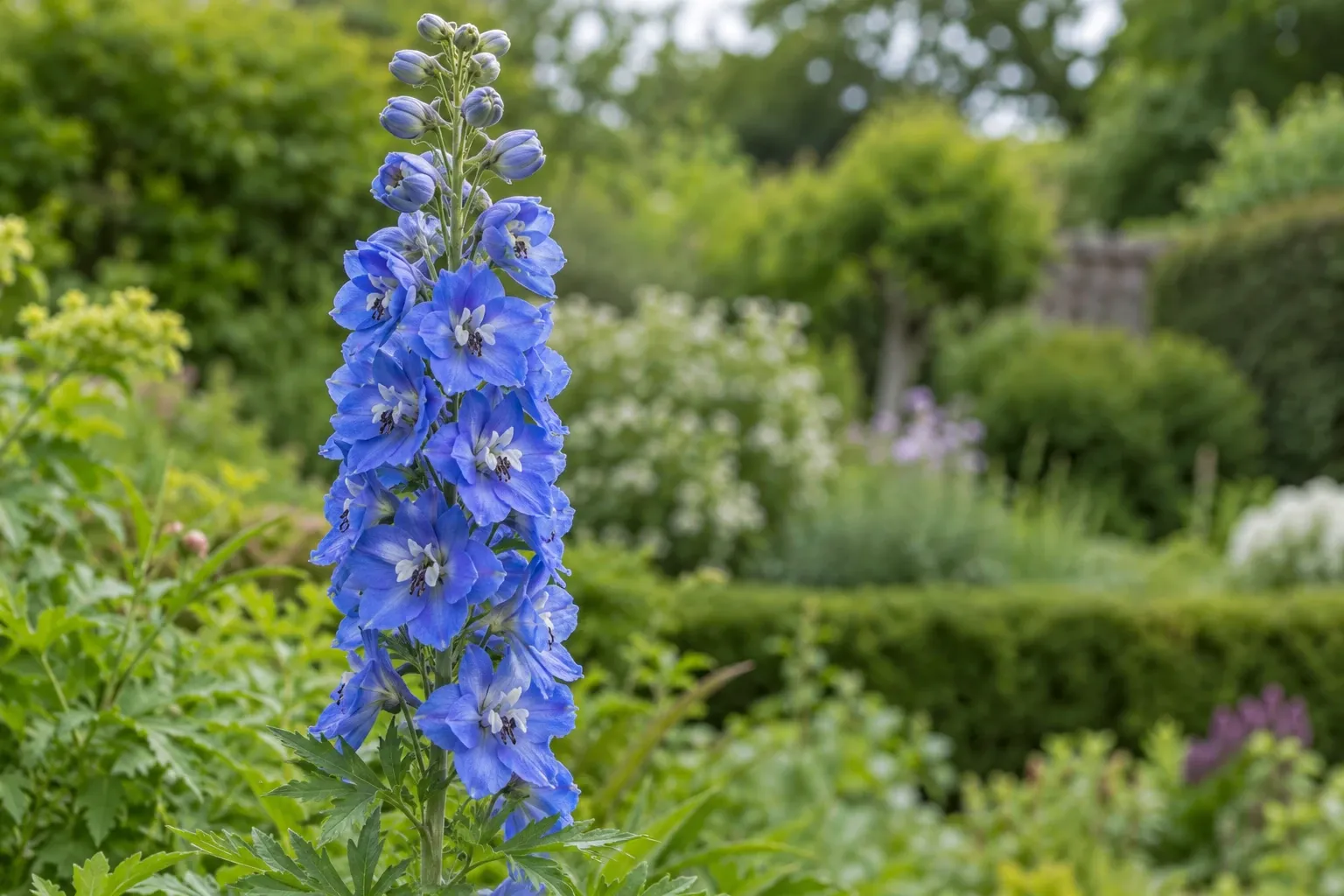
If you are choosing a delphinium plant for a small or medium garden, start with the space it will occupy when fully grown, not the size of the young plant in its pot. Tall flower spikes make a strong display, but they need sun, room and protection from wind. Shorter forms, annual larkspur and other perennials offer different ways to get colour when those conditions are hard to provide.
What should you check before choosing a delphinium?
Think first about sunlight, drainage, wind and maintenance time. Delphiniums flower best in a sunny, open position. They also need fertile soil that drains freely: ground that stays wet in winter can lead to poor growth or rot. The RHS recommends improving soil with well-rotted compost or manure before planting, while noting that heavy clay may need particular attention. If the site is exposed, a tall variety may need both a sheltered position and supports.
Allow for the plant’s mature width as well as its height. Delphiniums can be crowded out or shaded by neighbouring plants, and a young pot-grown plant gives little indication of how much border space its clump may occupy. Check the variety label for eventual dimensions and flowering habit before buying. For broader basics on matching plants to soil, light and the time you have available, see how to start a garden in the UK.
Which type suits your garden space?
Perennial delphiniums are the familiar tall border plants, but they are not all the same size. The RHS describes Belladonna Group plants reaching about 1–1.2m tall and 45cm wide, while Elatum Group plants can reach 1.5–2m tall and 60–90cm wide. Pacific hybrids can grow to about 1.8m. These are useful comparisons, not guarantees: check the named cultivar’s label, since mature dimensions vary.
For the back of a deep border, a taller Elatum cultivar can give the upright display many gardeners want, provided there is room and shelter. A compact choice, such as a Magic Fountain type, may be more practical near the front of a border or in a container; the RHS gives about 1m as a typical height for that series. In a small space, also consider whether the plant’s width and support structure will obstruct a path or shade plants behind it.
Annual delphiniums and larkspur are another option. They flower through summer, and the RHS says plants may reach 1.2m, while dwarf forms can be about 45cm. Their lighter, fern-like foliage and less permanent role can suit a seasonal display. They are not the same as a perennial delphinium clump, so check whether the seed or plant is labelled annual, perennial or Consolida (larkspur).
If the position is too shady, too exposed or too small for a delphinium, choose a plant suited to those conditions rather than forcing the fit. For a lower-growing perennial with foliage as well as flowers, coral bells for lasting garden colour offer a different border effect.
How do you plant and establish it?
Plant container-grown delphiniums in spring or early summer when the soil is workable and not waterlogged. The RHS says planting can take place at other times, too, provided you water during dry spells and avoid unsuitable soil conditions. Local weather matters: in colder parts of the UK, check the forecast for late frosts and take care with tender new growth.
Choose a sunny, sheltered spot with free-draining soil. Incorporate well-rotted organic matter if the soil needs improvement, then plant at the same depth as the plant was growing in its pot. Firm the soil gently and water it in. During the first summer, check the soil around the roots and water as needed; established plants may still need extra water in dry weather. Aim for moist soil, not saturated ground. In a container, check more often because compost can dry out more quickly.
When should you add support and remove faded flowers?
Plan support before tall stems begin to lean. The RHS advises supporting medium to tall plants from 1.2m upwards. For a clump, place at least three twiggy supports evenly around it, or use a suitable metal support. Put supports in early: the RHS recommends setting them in place before new growth reaches 30cm. Early fitting lets stems grow through the support and avoids forcing canes through established foliage later.
Keep an eye on new shoots in spring, when slugs and snails can damage them. Check leaves and stems as you water, and remove damaged material where appropriate. Good air movement and a sunny position help avoid the crowded, shaded conditions associated with some foliage problems. In dry weather, look for powdery white patches on leaves; watering the soil rather than repeatedly wetting foliage can help keep the plant’s immediate conditions more even.
When the first flower spikes fade, cut them back according to the plant’s growth and label. Perennial varieties may send up further flowers later in summer after spent spikes are removed, although a repeat display depends on the cultivar and growing conditions. Once foliage dies back in autumn, it can be cut down to ground level. The RHS also describes dividing mature clumps in early spring, typically every two to five years, as a way to improve the planting and make more plants.
How can you tell whether the choice is working?
A suitable position should give the plant sun for much of the day, soil that drains after rain and enough room for the clump and its supports. As it grows, check whether stems remain upright, leaves have adequate airflow and the soil stays moist without becoming waterlogged. If the plant repeatedly flops, reassess shelter and support; if the crown sits in wet soil through winter, drainage is likely the more important problem.
Delphiniums also need careful handling. The RHS says all parts are poisonous and contact with foliage may irritate skin, so wear gloves when handling, pruning or sowing seed. Keep cuttings and plant material away from children and pets. The RHS advice on potentially harmful garden plants lists delphinium, including larkspur, as harmful if eaten and advises seeking medical help if a person may have eaten a plant they cannot identify. For pets, contact a vet if you suspect ingestion.
A delphinium is a good fit when you can offer sun, drainage, shelter and room for a support system, and you are happy to keep watch over young growth. If those conditions are missing, a smaller form or a different perennial is more likely to fit the garden’s everyday needs.