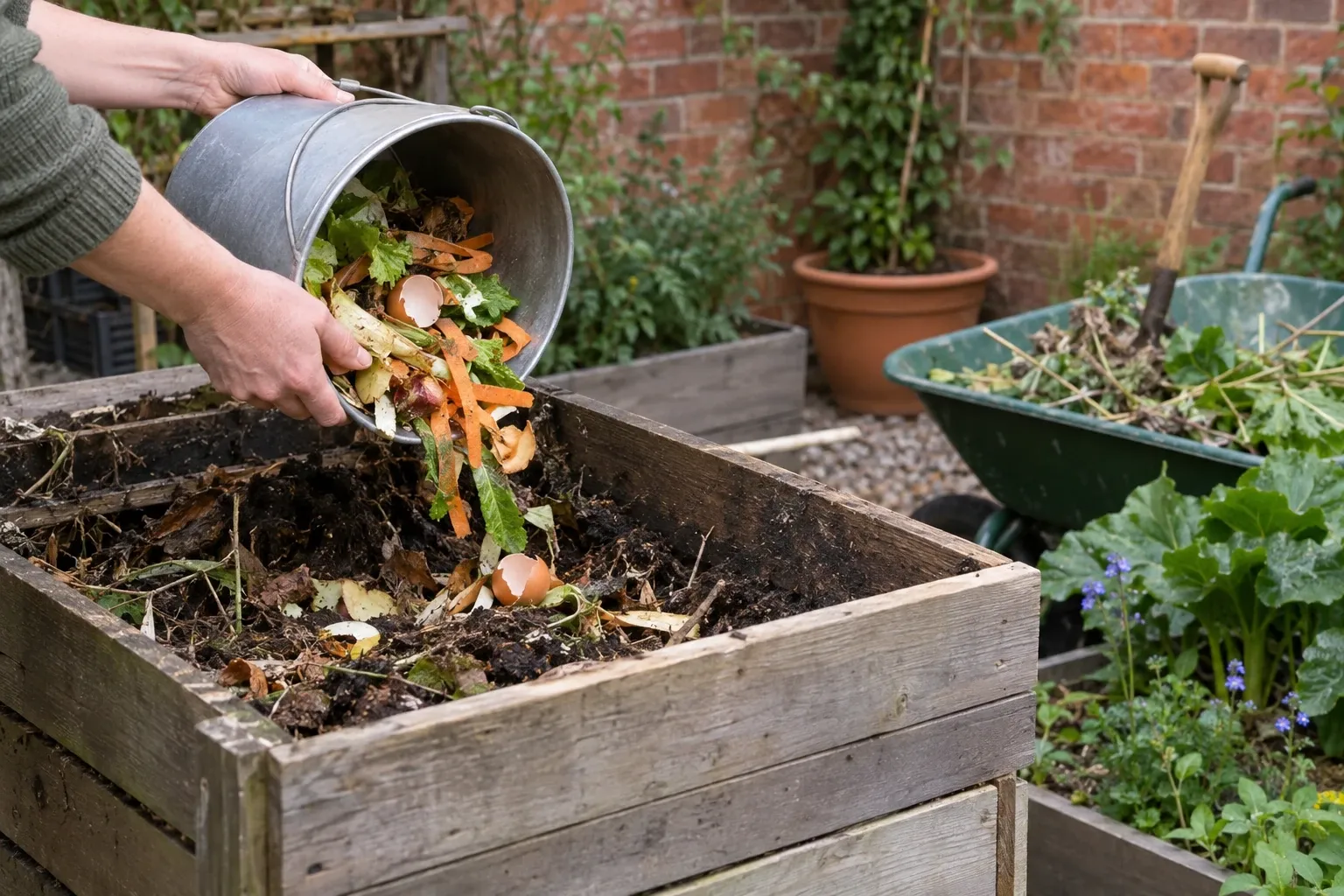
If you garden in Britain, you produce a steady trickle of prunings, weeds and kitchen scraps. With a good bin in the right spot and a simple routine, that waste becomes dark, sweet‑smelling compost that feeds soil life and makes beds easier to work. Below you’ll find where to put a bin, what to add, how to balance wet and dry materials, how often to mix, and how to tell when it’s ready. We also explain how garden compost differs from seed and potting composts.
What will garden compost do for your soil?
- Improve structure so clay is easier to work and sandy soil holds moisture and nutrients longer, while also supporting diverse soil life, according to the RHS composting guide.
- Serve mainly as a soil improver or mulch; it isn’t the same thing as seed or potting compost used in containers, which are blended growing media, as the RHS explains on the same page.
You’ll find more on assessing your sun, soil and time in our overview of starting and caring for a UK garden.
Where should you put a compost bin?
- Choose a sheltered, partially shaded spot so the heap avoids extremes of heat and rain and stays active through the UK year. A place you can reach easily encourages regular use. The RHS recommends this siting.
- On soil is ideal for drainage and for worms and microbes to move in. If you must use paving, add a few spadefuls of soil as a starter layer (RHS guidance).
What can go in – and what should stay out?
- Aim for a mix of “greens” (soft, moist, nitrogen‑rich) and “browns” (woody, dry, carbon‑rich). Garden Organic suggests a rough 50:50 mix by volume works well for beginners; examples include grass clippings and veg peelings as greens, with shredded prunings, dry stems, paper and cardboard as browns. See Garden Organic’s ‘What can I compost?’.
- From the kitchen, add veg and fruit scraps, coffee grounds, tea bags and eggshells. Avoid cooked food, meat, fish and dairy in a standard bin to prevent smells and vermin, per Recycle Now (WRAP).
- Be cautious with lawn clippings if you’ve used selective weedkillers: residues like clopyralid can survive composting and harm sensitive crops such as tomatoes and beans. The warning signs and actions are set out by the RHS on weedkiller contamination.
Which compost system suits your space and time?
- Single plastic “Dalek” bins: compact, tidy and good for small gardens with steady inputs. Bins under 1m³ are slower but still work, notes the RHS.
- Wooden bays (one to three in a row): faster and easier to turn if you generate lots of prunings or manage an allotment (RHS overview).
- Tumblers: speed things up if you like to crank a handle, but they need regular feeding with a balanced mix (RHS overview).
- Wormery: useful for very small spaces or if you mainly have kitchen scraps; it’s an alternative the RHS highlights when space is tight.
How to start and keep a heap going
- Site and set up
- Place the bin, remove weeds, and if on paving add a base layer of soil.
- Add materials in batches
- Alternate small layers of greens and browns. The RHS advises keeping greens to roughly 25–50% and bulking the rest with chopped woody browns so the heap stays airy.
- Chop, mix and cover
- Chop stems, tear cardboard and mix new additions through. Keep rain off to avoid a soggy, smelly heap and add water in dry spells so materials are just moist, per RHS guidance.
- Turn occasionally
- Turning adds oxygen and speeds the process. The RHS suggests doing this several times a year, but reassures you it will still compost if you can’t turn often.
- Keep kitchen waste tidy
- Bury fresh scraps under a cap of garden waste to deter flies, a simple fix the RHS recommends.
How to recognise finished compost
- Timeframe: expect roughly six months to two years depending on season, volume and how often you turn, says the RHS.
- Look and smell: dark brown, crumbly, with an earthy, damp‑woodland smell. Sieve or pick out woody bits and return them to the next batch (RHS).
- How to use it: spread as a mulch or work it lightly into the topsoil to improve structure and water holding. For mulching, the RHS describes laying organic matter in a layer thick enough to cover the soil surface.
Troubleshooting common problems
- Wet, slimy, smelly heap? Keep rain out, add more browns (woody chips, straw, shredded paper) and mix to bring in air, says the RHS problem‑solving page.
- Dry and fibrous with little decay? Add water in summer and a fresh dose of greens, then mix (RHS).
- Suspected herbicide contamination from clippings or manure? The RHS explains symptoms and simple seed tests; avoid adding further treated material and use uncontaminated organic matter instead.
Garden compost vs seed and potting composts
- Garden compost is a bulky soil improver made from rotted plant waste. Seed and potting composts are blended growing media for containers, often peat‑free mixes based on loam, composted bark, coir and sand, as set out by the RHS.
- For sowing and containers, choose or blend a peat‑free potting mix that matches your plants. See how to choose peat‑free compost for the plants you grow.
Seasonal and UK‑specific tips
- Spring to autumn provides the best flow of materials; winter slows the process. Keep a small store of damp browns (torn cardboard, chopped stems) to balance sudden loads of grass.
- On heavy ground, compost used as surface mulch helps structure and drainage over time; combine it with other practices when you work with clay soil.