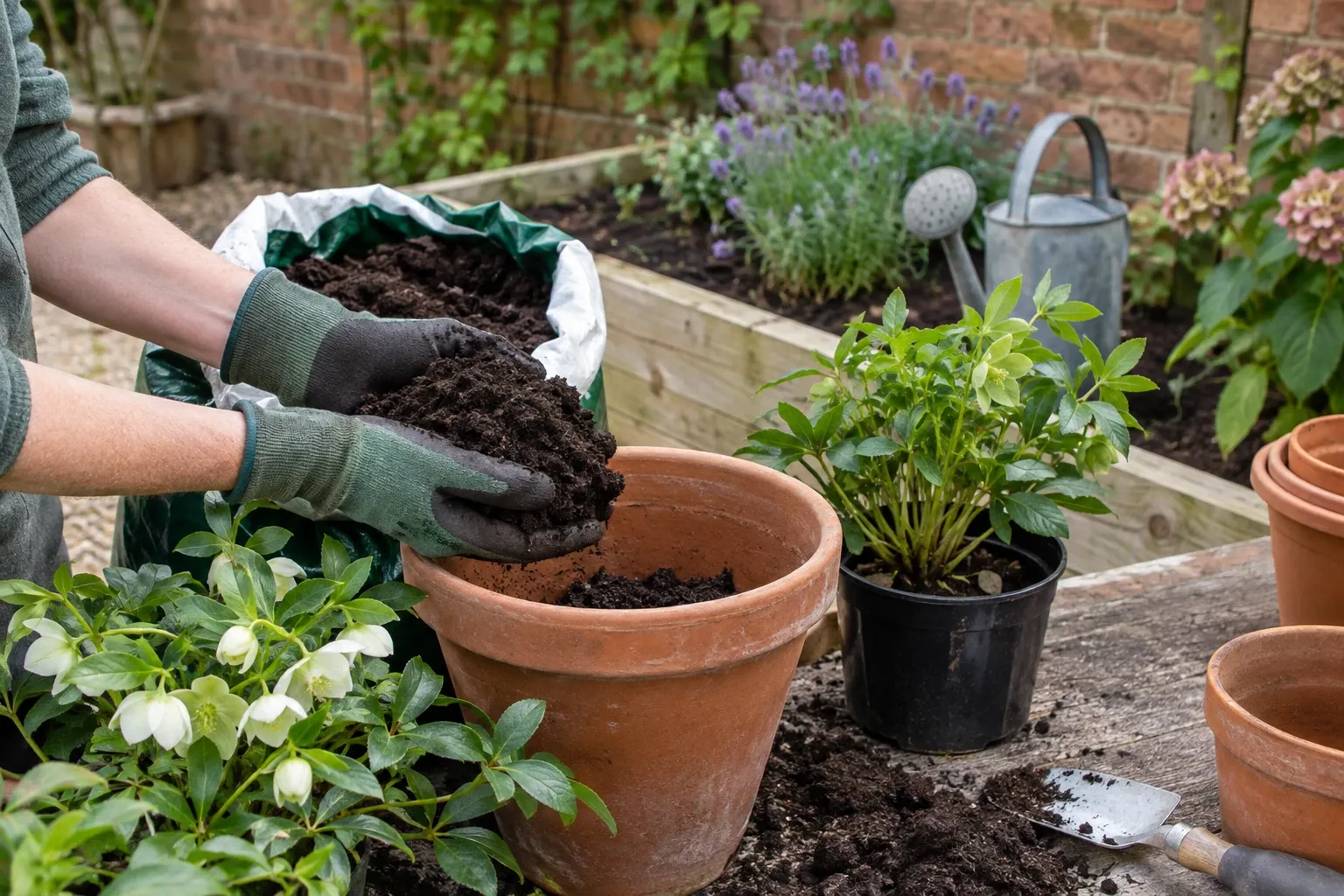
Peat‑free composts now cover almost every use in a UK garden, but the bag labels can still be confusing. You’ll see multi‑purpose, seed sowing, container or John Innes, ericaceous, soil improver and mulch – all peat‑free, yet made very differently. This page helps you match the mix to the job, explains how ingredients like composted bark and coir behave, and shows you how to adjust watering and feeding so plants thrive. It also clarifies where UK policy stands on retail peat, so you can buy with confidence.
What counts as peat‑free compost – and what doesn’t?
On bagged products, “peat‑free” should be printed clearly on the front. Potting composts (for seeds, pricking out and containers) are growing media; soil improver and mulch are for beds and borders and are not suitable on their own in pots. The Royal Horticultural Society (RHS) lists common peat‑free ingredients such as composted bark, coir, wood fibre and loam, and confirms you can now buy peat‑free versions of seed, multi‑purpose and ericaceous mixes (RHS peat‑free choices).
Switching helps protect long‑formed peatlands. Natural England highlights that England’s peatlands store an estimated 580 million tonnes of carbon and provide major biodiversity benefits (Natural England on peatland carbon).
On policy, ministers reiterated in January 2026 that they plan to legislate a retail sales ban on peat “when parliamentary time allows”. Treat this as an intention rather than a rule you can rely on at the till (UK Parliament written answer).
How to choose a mix for your job in hand
Pick by task first, then by ingredients and texture:
- Seed sowing: fine texture, good drainage, low nutrients so roots branch well. Look for “seed” or “sowing” on the bag. The RHS advises feeding lightly once true leaves appear and checking moisture below the surface, as peat‑free mixes can seem dry on top (RHS peat‑free tips).
- Potting on and containers: multi‑purpose or container compost with added wood fibre or composted bark for structure. For long‑term tubs, a loam‑based “John Innes‑type” peat‑free mix holds nutrients and moisture more steadily (ingredients detail via the RHS overview).
- Ericaceous plants: choose a peat‑free ericaceous compost with a lower pH for calcifuge plants such as blueberries, camellias and rhododendrons. In hard‑water areas, use collected rainwater to avoid raising pH over time (watering practice in the RHS tips).
- Soil improver and mulch: for beds and borders, fork in composted bark or green‑waste based improver to boost structure and water‑holding, then mulch the surface to reduce evaporation (materials listed in the RHS overview).
If you are just getting started outdoors, see how to start and care for a garden so your compost choice matches sun, soil and time.
Peat‑free options at a glance
| Task | What to buy | Typical peat‑free ingredients | Notes |
|---|---|---|---|
| Sowing seeds | Seed sowing compost | Fine composted bark, coir, sand | Fine texture encourages even germination; begin light feeding after true leaves form (see RHS tips). |
| Pricking out, young plants | Multi‑purpose | Bark, coir, wood fibre | Free‑draining yet moisture‑retentive; watch moisture below the surface before watering. |
| Summer containers | Container or peat‑free John Innes‑type | Loam plus bark/coir, slow‑release fertiliser | Loam steadies watering and nutrients for pots kept beyond one season. |
| Ericaceous plants | Ericaceous (acid‑loving) compost | Composted bark, coir, sulphur‑adjusted pH | Use rainwater in hard‑water areas; refresh the top 5–8 cm each spring. |
| Beds and borders | Soil improver; mulch | Green compost, composted bark | Fork in to improve structure; mulch to reduce watering and suppress weeds. |
How to water and feed peat‑free media so plants thrive
- Check below the surface. The RHS notes peat‑free mixes often look dry on top while holding water lower down, so probe with a finger or lift a small pot before adding more.
- Water to weight, not habit. In containers, soak thoroughly, then let excess drain. Aim for even moisture, especially for seedlings and fruiting veg.
- Start gentle feeding early. Once seedlings have true leaves, give a dilute liquid feed weekly; increase gradually as growth speeds up (guidance from the RHS peat‑free tips).
- Keep ericaceous mixes acidic. Where tap water is hard, use rainwater and avoid liming. Top‑dress ericaceous containers annually with fresh mix.
Avoid the common mix‑ups
- Don’t fill pots with soil improver. It is for the ground, not containers, and can slump or go waterlogged. Choose a potting compost instead (materials contrasted in the RHS overview).
- Don’t overwater because the surface looks dusty. Test deeper first; adjust frequency rather than volume each time (watering behaviour explained in the RHS tips).
- Match the pH to the plant. Use ericaceous mixes only for acid‑lovers; ordinary shrubs and veg prefer neutral composts.
If your garden soil is heavy
You can still plant into the ground and save pots for crops that appreciate warmth and even moisture. Fork bulky organic matter into sticky ground sparingly and at the right time so you don’t smear the structure; our guide to work with clay soil explains how to improve drainage and tilth without making things worse.
How to check your choice is working
- Seed trays: germination is even, roots are white and branching, and the surface stays evenly moist between waterings.
- Containers: plants put on steady growth without tip burn or yellowing; the compost dries from wet to barely moist in one to three days in summer.
- Ericaceous plants: new leaves are glossy green, flower buds set well, and there’s no lime scale on the compost surface. If growth pales, step up dilute feeding; if leaves yellow with green veins, review watering quality and pH maintenance.
Where UK policy stands
Buy on performance, not on rumours. Government plans to legislate a retail peat ban were restated in January 2026 but had not yet been passed at that date; check the label for “peat‑free” and choose a product that suits your task.