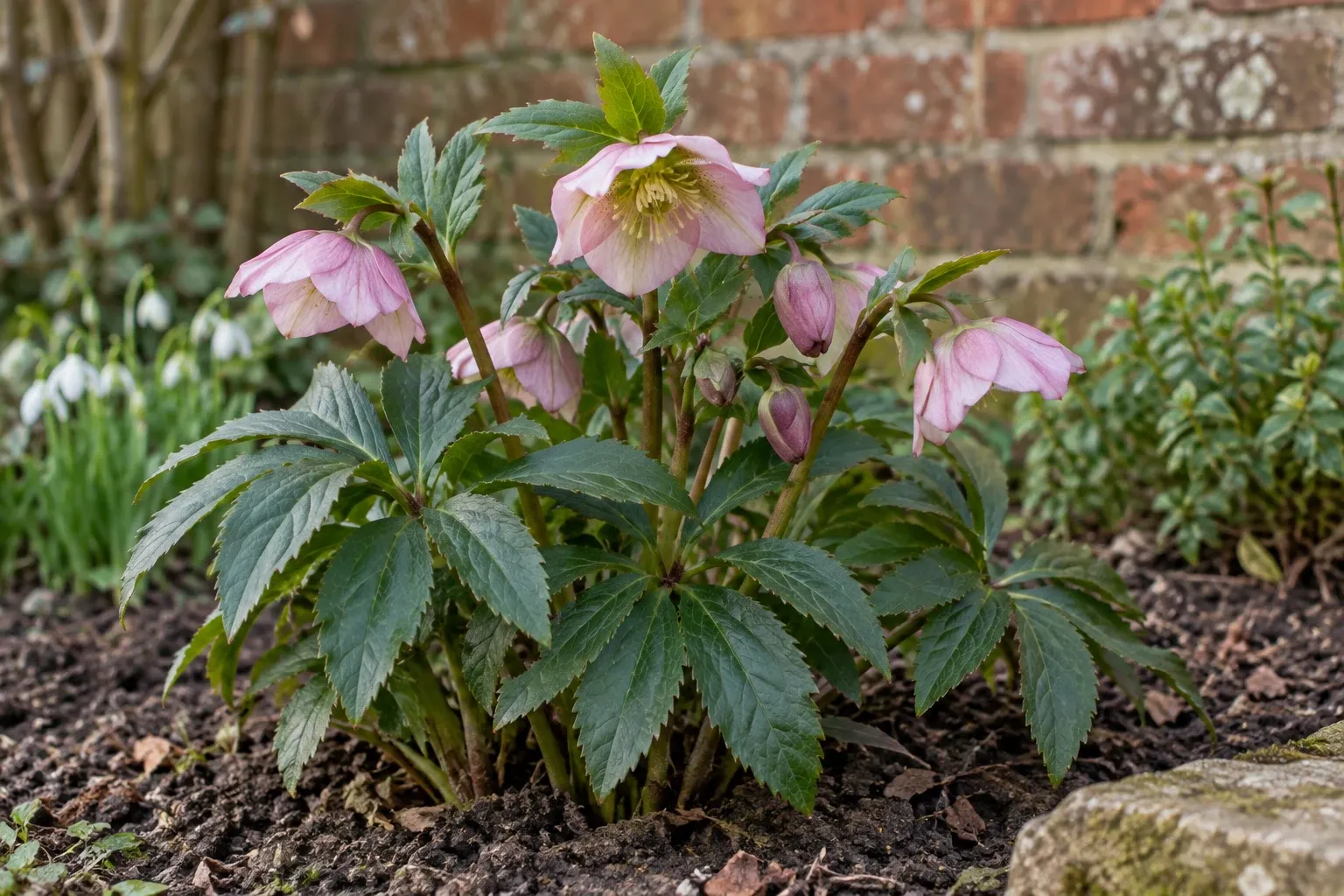
If you have a shaded corner that feels bare in winter, a hellebore may be a good fit. These clump-forming perennials flower in the colder months or early spring, but their needs vary: a tough Oriental hybrid and a Christmas rose, for example, do not respond equally well to cold, wet soil.
Before choosing a plant, check how much light the spot gets, whether water drains away, and how much room the mature clump will have. The right match makes planting and routine care simpler, whether you are working with a border, raised bed or container.
Where will a hellebore grow well?
Most hellebores suit light or dappled shade with some sun during the day. A spot under deciduous trees or near a shrub can provide this, but avoid places that become very dry in summer or stay waterlogged after rain. Moist, fertile soil with good drainage is a useful starting point. If you are new to gardening, take the same practical approach to light, soil and maintenance when you start caring for a garden.
The RHS advises planting hellebores from autumn to spring, while avoiding the dry summer months where possible. Its hellebore growing guide notes that most types prefer partial shade, but there are exceptions. Stinking hellebore (Helleborus foetidus) tolerates deeper shade; holly-leaved hellebore (H. argutifolius) and H. × sternii are better in sun and shelter from strong, cold winds.
Check drainage especially carefully if you have heavy clay or a low-lying border. Some kinds, including the Christmas rose (H. niger), dislike cold, wet soil and need particularly free-draining conditions. Where the ground remains wet in winter, consider a raised bed or a container for types that need extra drainage rather than planting first and hoping the spot improves.
Which hellebore suits your garden?
Oriental hybrids (Helleborus × hybridus) are a practical choice for many gardens. They are widely grown, generally hardy, and their flowers come in colours including cream, pink and ruby, often with speckles. Their clumps can persist for years in a suitable position. Many have evergreen foliage, so the leaves remain part of the display outside the flowering season.
Other types have a different look or need a little more thought. Helleborus foetidus bears small green flowers above finely divided foliage, while H. argutifolius has glossy, holly-like leaves and green flowers. The Christmas rose is known for white flowers, but needs excellent winter drainage. The RHS lists H. niger as a plant for partial shade, with moist but well-drained soil and a hardiness rating of H7; the RHS profile for Helleborus niger also notes that it can irritate skin and is harmful if eaten.
Compare a plant’s eventual spread with the space you have, not just the pot size at purchase. The RHS suggests spacing most hellebores 35–45 cm apart. Larger types need more room: it gives 60–120 cm for H. argutifolius and 60 cm for H. foetidus. These are planting distances, not a guarantee that every cultivar will form an identical-sized clump, so check the label for the specific plant you buy.
How do you plant a hellebore?
Plant at the level the hellebore was growing in its pot. Do not bury the crown deeply: the crown is the point where the stems meet the roots, and planting too deep can lead to poor growth. Water the plant in after planting, then apply organic mulch around it to help the soil hold moisture. Leave a gap around the base so mulch does not sit against the crown.
If you are using a pot, choose one only slightly larger than the nursery container and use free-draining, peat-free compost. Hellebores that dislike winter wet or need frost shelter can be easier to protect in a container that you can move. Match the compost to its purpose rather than treating all bagged mixes as interchangeable; the choice of peat-free compost for containers matters particularly when drainage is important.
A container plant needs closer attention to watering than one established in the ground, because compost can dry out more quickly. Keep pots out of strong summer sun, and check them regularly during dry spells. In winter, make sure water can escape freely through the drainage holes rather than collecting around the roots.
What care does a hellebore need through the year?
Newly planted hellebores need extra watering during their first growing season, from spring into summer. Once established, water during hot, dry spells rather than on a fixed schedule. Container-grown plants may need more frequent checks. In borders, hellebores seldom need extra feeding; if growth is poor, first check whether the soil is too dry or waterlogged. Feeding cannot correct a poorly chosen site.
An annual mulch helps maintain moisture and adds organic matter. Spread it around the plant, keeping the crown clear. For routine border work, a small set of reliable garden tools is enough to lift weeds, loosen the surface carefully and apply mulch without disturbing the roots.
Pruning depends on the type. For Oriental hybrids, remove old leaves in late winter or early spring to reveal the flowers and help control hellebore leaf spot. With other types, remove damaged or diseased foliage; after flowering, old flower stems and ageing leaves can be cut away as new growth develops. If you want seedlings, leave some seedpods to ripen; otherwise, remove them before they open if you do not want the plant to self-seed around the border.
How can you tell whether the planting is working?
Look for healthy new growth and flowers in the plant’s expected season, rather than judging it immediately after planting. A hellebore may take time to establish, and the RHS lists a maturity period of 2–5 years for H. niger. If foliage repeatedly wilts in dry weather, check moisture; if it yellows or deteriorates in persistently wet ground, check drainage and consider whether that type is suited to the site.
Inspect leaves for spotting or other damage, and remove affected foliage instead of leaving it among healthy growth. Hellebores can also attract aphids, leaf miners and snails. Identify the problem before taking action: the RHS notes that hellebore leaf miner affects H. foetidus, while leaf spot can affect hellebores more generally. Wear gloves when pruning or handling plants, particularly if you are unsure of the species, and keep cut foliage away from children and pets.