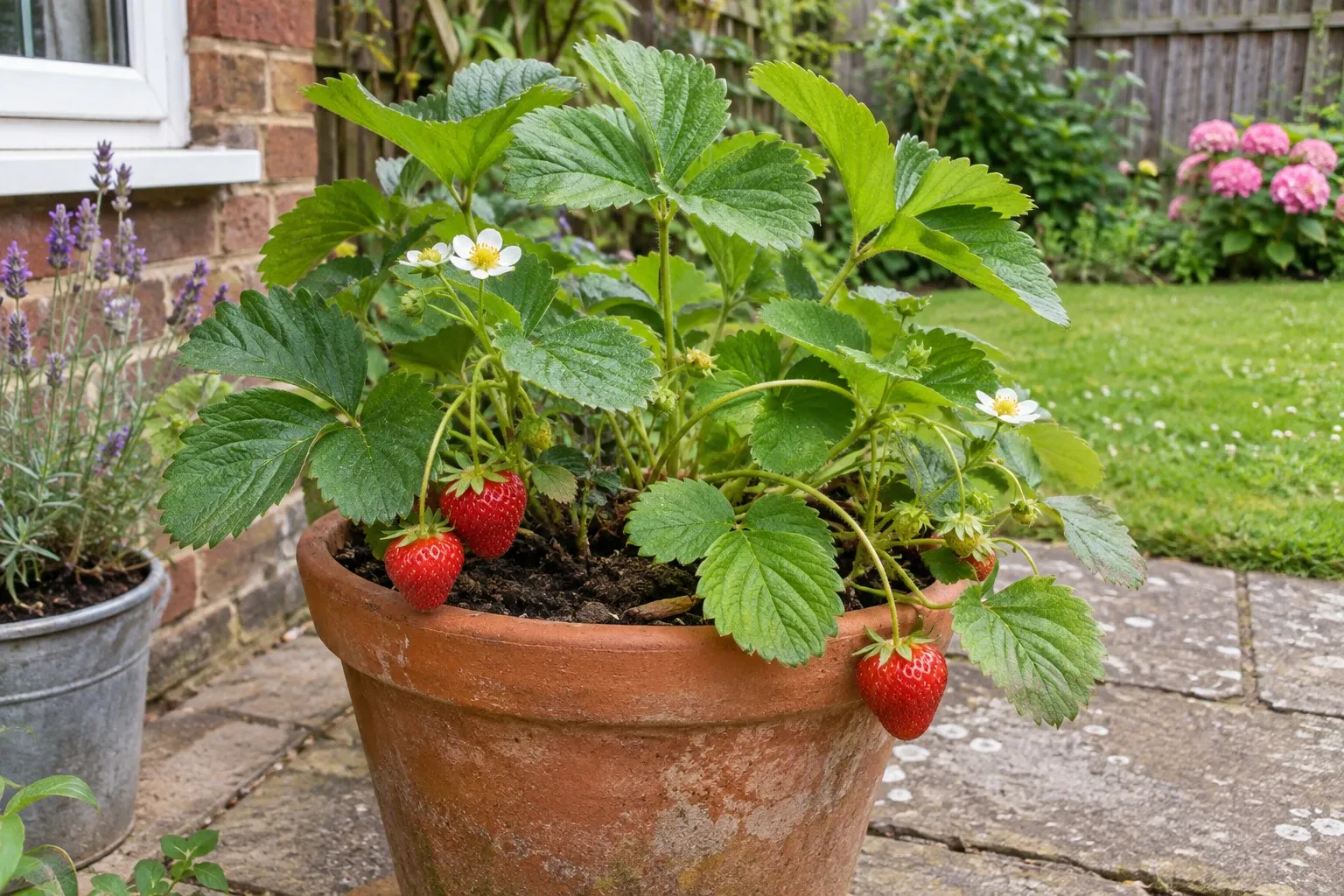
A strawberry patch can fit a small garden, but the best choice depends on when you want fruit, how much room you have and how often you can water. In the UK, planting time and harvest vary with variety, region and weather, so it helps to choose a type before buying plants. Decide whether you want a short, larger flush or smaller batches over a longer period, then choose an open bed, raised bed or container that gives the plants sun and you easy access.
Which strawberry type suits your harvest plans?
The three main choices are summer-fruiting, perpetual and alpine strawberries. Summer-fruiting varieties give one relatively concentrated crop; the RHS describes the cropping period as two or three weeks, with early, mid- and late-season varieties extending the overall season. They suit you if you would rather pick a larger flush over a shorter spell. Perpetual, also called everbearing, varieties produce smaller flushes over a longer period, typically from early summer into early autumn, depending on variety and conditions. Alpine strawberries produce small, aromatic fruits intermittently through summer and can suit a border edge or a less formal planting.
For a clear comparison of their seasons and habits, use the RHS strawberry-growing guide. Its descriptions are general growing guidance, not a guarantee of when or how much any plant will crop. If you want to spread picking across the season, choose varieties with different cropping times; if you prefer less frequent picking, a summer-fruiting type may be a better fit.
Where can you grow strawberries?
Choose a sunny, sheltered position with fertile, well-drained soil. Strawberries can grow in a traditional bed, raised bed, pot, trough, growing bag, window box or hanging basket. In a small garden, the practical test is not simply whether a container fits: consider whether you can reach the plants to pick fruit, check for pests and water them. The RHS notes that containers and baskets may need regular watering because compost can dry quickly.
Before committing to a bed or row, think through sunlight, access and watering as part of planning a practical garden layout. If the patch meets a lawn or other planting, the boundary can also affect mowing and weeding; choose edging for a planted border that suits the materials and upkeep you already have. Keep the strawberry plants themselves in an accessible position rather than squeezing them into a difficult corner.
When should you plant, and how far apart?
Spring and early autumn are common planting windows, but the best timing depends on the type and form of plant you buy, and on local conditions. The RHS guide gives planting guidance for different stock, including potted plants, bare-root plants and runners. In colder areas, or where frost is still likely, take local conditions into account rather than treating a calendar date as a guarantee. Water new plants while they establish.
For plants going into the ground, allow about 35–40 cm between plants and around 75 cm between rows. The space lets you reach the fruit and weed without constantly disturbing the crowns. A crown is the short central growing point where leaves emerge. Set it level with the soil surface: burying it risks rot, while leaving the roots exposed can let them dry out. Firm the soil gently around the roots and water to settle it.
Containers need drainage holes and enough room for the roots and foliage. The RHS advises that strawberries can be grown individually in pots or together in larger containers, as well as in hanging baskets. Fill with suitable peat-free multi-purpose or soil-based compost. Avoid overcrowding: a crowded container is harder to water evenly and inspect, and foliage packed tightly together dries more slowly after rain or watering.
How should you care for plants through the season?
Keep the planting area free of weeds, which compete with the strawberries for water and nutrients. Water when the soil or compost is drying, paying particular attention to newly planted strawberries and plants in containers during prolonged dry weather. Direct water towards the soil rather than the crown or fruit where possible. Watering in the morning gives splashed foliage time to dry during the day.
Plants in good soil with regular mulch may not need extra feeding. If plants are in containers or growing bags, the RHS recommends feeding every fortnight during the growing season. Follow the product label and avoid adding more feed than directed. If plants are establishing slowly, whether to remove their first flowers depends on the strawberry type and when it was planted; the RHS sets out those distinctions in its growing advice. Do not assume the same treatment suits every plant.
Protect flowering plants if frost is forecast, particularly when flowers or early fruit are present. Keep an eye on slugs, snails and grey mould, a fungal problem that can damage fruit. Good spacing and removing affected material help with monitoring and airflow, but neither removes all risk. Pick fruit promptly when ripe, and avoid leaving damaged berries among healthy fruit.
How do you keep the patch productive?
During the growing season, check for new runners. A runner is a long stem that produces a small plantlet. If you want to expand the patch, set a small pot of compost beside a healthy plant, peg a plantlet onto the compost and keep it slightly moist while it roots. The RHS describes using a piece of wire about 15 cm long to peg it down. Once the new plant has rooted, sever its connection to the parent. Remove runners you do not want, so they do not fill the space reserved for established plants.
After harvesting, clear away unhealthy leaves and unwanted runners, and keep the row accessible for weeding and picking. For container plants, check moisture more often than you would for a bed, especially in warm, sunny weather. The RHS suggests replacing container-grown strawberries about every three years or so; treat that as general guidance and assess the health and vigour of your own plants. A poor crop alone does not identify a single cause: check light, watering, crowding and plant health before changing several things at once.