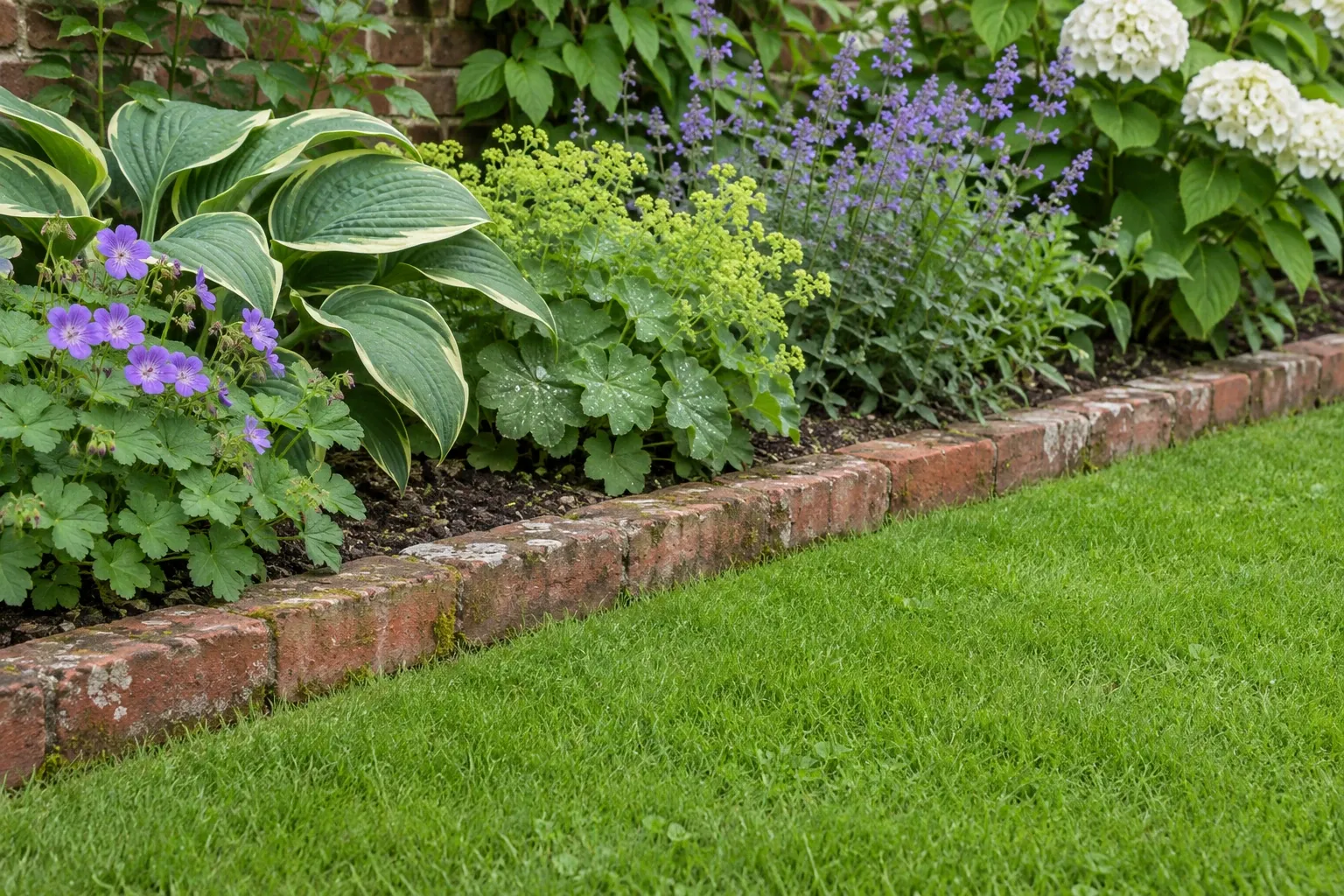
If grass is creeping into a flower bed, mulch is spilling onto the lawn or a new border looks unfinished, edging may help define the boundary. It is not automatically a barrier to every weed, and a hard edge will not correct poor drainage. The useful choice is one that fits the line you want, sits at a workable height and can be installed without damaging roots or creating a new maintenance chore.
What should the edging do?
Start with the problem you want to solve. A mowing edge needs to give wheels a predictable run and leave little grass to trim by hand. A border beside gravel may need to contain loose material. A raised bed needs a sturdier structure than a shallow decorative strip. If the main aim is a crisp outline, a simple cut into turf may be enough, provided you are willing to renew it.
Think about the whole garden before settling on a line. Check where you see the edge from, how you move around it and whether the curve leaves enough room for plants and mowing. The RHS recommends broad, sweeping lawn curves rather than intricate shapes because they are easier to maintain; it also notes that wood or metal edging can help retain the shape and ease trimming, in its advice on creating a lawn edge. Use a hose to test a curve or a taut string for a straight run, then view the marked line from the house and from other useful angles.
For a wider layout, consider how the boundary relates to planting, access and the time you have for upkeep. A workable garden layout for your space helps prevent edging from becoming an isolated feature that narrows a route or crowds a bed.
Which edging material fits the job?
A natural, cut-turf edge is the least complicated option. Cut a neat line with a half-moon edger or spade and remove the narrow strip of turf. There is no permanent material to fit, and the border can be reshaped easily. The trade-off is repeat maintenance: grass can creep into the bed, so you will need to recut or trim the edge as it grows.
Metal strips, commonly steel or aluminium, give a slim, unobtrusive division and can suit gentle curves. They are most useful when you want a continuous line without a broad visible border. Check how the sections join, what anchors are supplied and whether the product is intended for the ground conditions and the degree of curve you have. Avoid leaving a sharp or high exposed lip where people walk or a mower passes.
Timber boards and log-roll edging are more visible and can suit a rustic or informal border. Boards on stakes can also define a straight edge or help contain soil in a simple raised bed. Timber may weather or decay, so consider whether you can inspect and replace it without disturbing nearby plants. Do not assume that decorative log rolls will restrain soil as effectively as a fixed board.
Bricks, setts, stone and concrete create a substantial, long-lasting-looking boundary and can work well with a formal garden or existing hard surfaces. They need a stable, even base if they are to stay aligned. A wider, level strip can also make mowing easier, but joints and uneven surfaces may collect soil or grass. These materials are less convenient to move if you later change the bed shape.
Flexible plastic edging is light and can follow bends, but its appearance and rigidity vary between products. Check the installed height and fixing method rather than judging a loose sample. Whatever you choose, compare durability, repairability, visibility and the work needed to keep the boundary tidy, not just the initial appearance.
How do you install edging without making extra work?
Mark the route before buying or cutting material. Measure along the actual line, including curves, and allow for the joints or overlaps specified by the manufacturer. If the line is not final, leave the edging unfixed while you check the shape and mower access. The RHS advises avoiding lawn-edge work when the ground is frozen or very wet; firm but workable soil makes it easier to cut and judge the finish.
Before digging, check for buried services and avoid cutting through established plant roots. Move plants temporarily only where necessary. If the bed is being created or substantially changed, prepare its soil separately from the edging work. The RHS recommends adding organic matter at least 5 cm deep, aiming for 10 cm on sandy or heavy clay soil; these are soil-improvement amounts, not trench depths or edging specifications. Its border-creation advice also says dry or bare-root plants can be soaked for at least 10 minutes before planting. Follow the material supplier’s installation instructions for trench dimensions, anchors and joining pieces, since these vary by product.
For a simple turf edge, mark the line with a hose or string and cut a continuous groove. The RHS suggests marking a 7.5 cm depth on a flat-backed spade when cutting a new lawn edge. Lift unwanted turf in manageable strips, then check the line from both ends. For a physical edging product, set a short section first and check its height against the finished lawn and border soil. Keep connectors aligned, secure the edging as directed and backfill both sides firmly enough to prevent movement without burying the visible edge.
Do not set the border soil so high that it washes over a path or hides the top of the divider. A modest drop from lawn to bed can help hold mulch, as the RHS notes in its lawn-edge guidance. But where water already ponds, do not use edging to dam it in. Investigate the cause first; the steps for finding what is behind a waterlogged garden are relevant before installing a continuous barrier.
How can you check the finished edge?
Walk the whole boundary and look for gaps, sharp ends, rocking sections or places where soil covers the top. Push gently against the edging to find loose points, and check that joins do not open when the line curves. Mow alongside it if the ground is firm and safe to do so; this reveals whether the mower can reach the edge or whether you will still need shears or a strimmer.
After rain, check that water is not collecting against the edging and that soil or mulch has not shifted onto a path or lawn. In the first growing season, watch for grass crossing the boundary, plants leaning over it and sections settling. A solid edge may reduce the need to recut the boundary, but it does not remove all trimming: Thrive lists log rolls, steel, sleepers, bricks, large stones and concrete among common solid options, and notes that some still require a strimmer for a neat finish in its guide to lawn edging choices and upkeep. Keep the tool you need for the actual finish in mind when choosing the material.