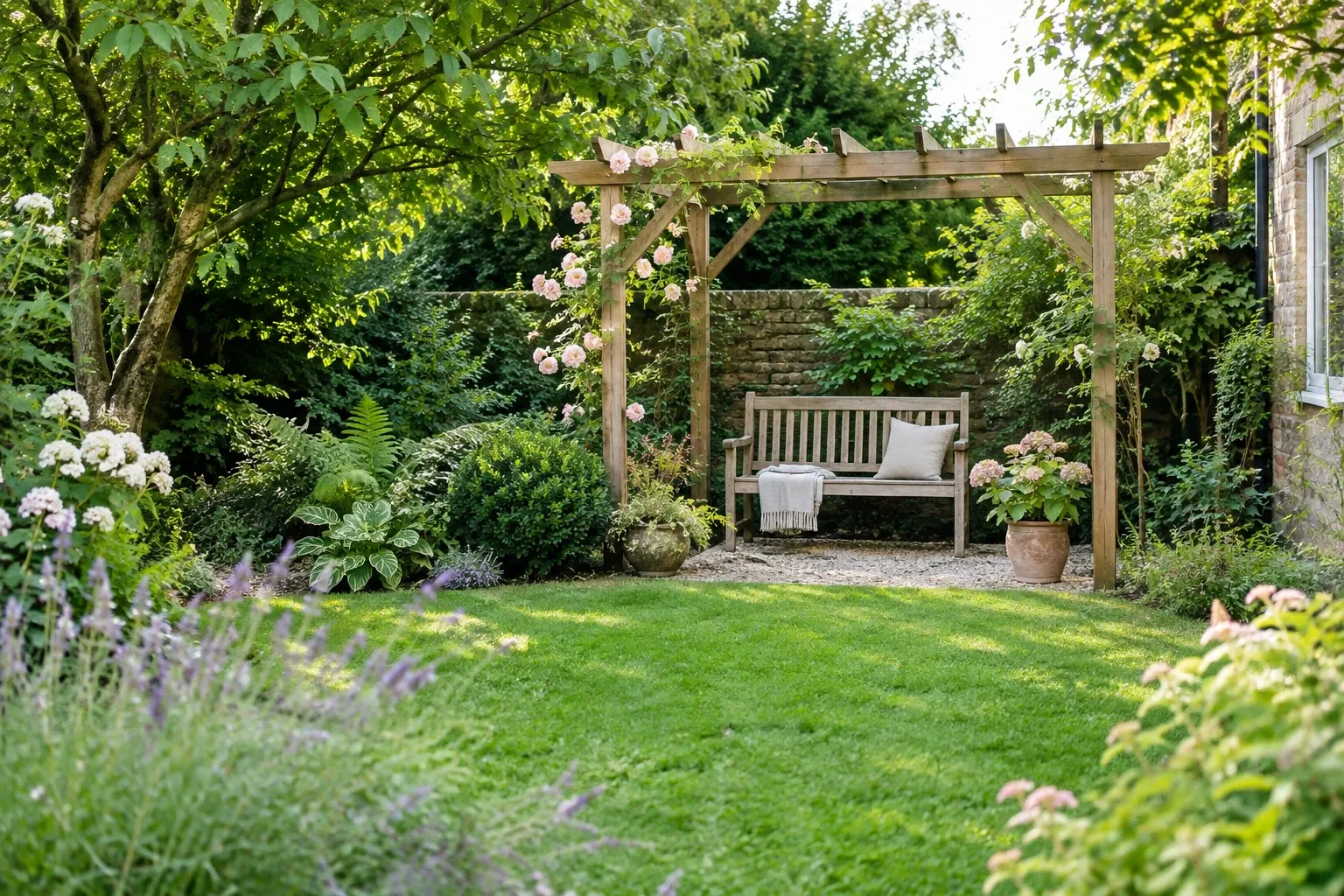
If you are weighing up pergola ideas, start with what you want to do beneath it. A place to eat needs clear access and enough room for chairs; a walkway needs to lead somewhere; a planted frame can add height without taking much ground space. In a small garden, a pergola can also make a useful focal point, but a bulky structure in the wrong position may block light or make the space harder to use. Think through the layout before settling on a style.
What do you want the pergola to do?
Start with the garden’s everyday use rather than a photograph of a design. If you want an outdoor dining spot, place the structure where carrying food and moving chairs will be convenient. If you want a shaded pause, consider a bench facing a view, planting or a sunny part of the garden. A pergola can also mark a route between the house and a lawn, or draw the eye towards a seat at the far end.
A useful layout makes its purpose clear without making the garden harder to cross. Walk the paths you already use, note gates and doors that need to open, and consider where a table or bench will sit. For a wider check of circulation, sun and practical priorities, plan a layout around your garden’s needs. In a compact space, compare the proposed footprint with the paths and views that make the garden feel open; make a small space work harder by giving each area a clear purpose rather than adding features without a job.
Which pergola idea suits your space?
A pergola is an open framework of uprights and overhead crossbeams, not automatically a weatherproof roof. The RHS describes it as an open-topped canopy that can add height and shade, with climbers providing colour and foliage. That distinction is useful when you are choosing between a light frame and a covered garden structure: an open top keeps a sense of sky, while foliage can build up over time and change with the seasons. See the RHS advice on pergolas for examples of suitable climbers and care considerations.
For a patio, an open pergola can define a seating or dining area while keeping the space connected to the rest of the garden. For a path, a series of overhead beams can create a destination or passage; leave the route easy to follow and avoid planting that will obstruct it. In a border, a freestanding frame can bring height to otherwise low planting. If your garden is exposed, consider whether the structure and its future foliage will feel comfortable there, and whether the chosen plants can cope with the site.
Planting is one way to soften the structure, but it changes the amount of upkeep. The RHS recommends vigorous or scrambling plants such as rambling roses, suitable clematis and honeysuckles for pergolas, while noting that strong growers may need restricting. Some climbers need tying in rather than clinging to a surface themselves. Choose plants for their mature growth and pruning needs, not just their flowers; the RHS guide to planting climbers explains that many need a support in place and identifies spring or autumn as suitable planting seasons for most.
You do not have to cover every beam. A lightly planted frame can preserve more light and make maintenance easier; a denser canopy may give more shade when established but can require more training and pruning. In a UK garden, deciduous climbers can change the feel of the space through the year, while evergreen foliage provides a different kind of presence. Consider the light you want in the adjoining rooms and garden, too, especially before encouraging a dense canopy close to a window.
How can you make the idea fit the garden?
Mark out the intended footprint with string, canes or another temporary guide before making a decision. Then test the practical details: can you pass comfortably, move garden furniture, reach a gate and maintain nearby beds? Look at the structure from the house as well as from the garden. Posts can interrupt a view or create awkward corners, while a frame aligned with an existing path or patio edge may feel more settled.
Plan for the planting space as well as the overhead frame. Climbers need room at ground level, and established plants can compete with nearby border planting. Consider soil condition, access for watering and whether the spot is sheltered or exposed. If water already collects where you hope to place the pergola, find the drainage cause before committing to the layout; edging or a defined border can also help separate planting from a lawn or path, if that suits the space.
Keep the design proportionate to its job rather than relying on a universal set of dimensions. A walkway, a seating area and a focal-point frame have different uses, and the available space, furniture and users all affect what feels comfortable. Check the intended clear route with the actual chairs or bench you plan to use. For an open pergola, think about whether beams will provide enough visual definition and whether there is room for plants to spread without obstructing movement.
What should you check before choosing a roof or position?
Be clear about whether you want an open pergola or a roofed, enclosed or substantially covered structure. These may have different planning implications. Planning Portal’s guidance on outbuildings and their limits is for England and explains that permitted development depends on meeting conditions; it also advises checking local restrictions and notes that policy in Wales may differ. The label used by a supplier does not determine how a proposal will be assessed.
Check your property’s situation before installation. In England, restrictions can apply around listed buildings, designated land and locations where permitted development rights have been removed. The UK Government’s householder permitted development guidance sets out conditions and exclusions; it is not a substitute for checking the circumstances of your property. The planning systems differ across the UK, so contact the relevant local authority if the structure will have a solid roof, be attached to the house, or sit in a sensitive location.
How will you know the choice works?
Before buying materials or plants, revisit the marked-out position at different times of day. Notice whether it shades a place where you want sun, affects a view from indoors or sits in a route used for everyday tasks. Imagine the structure both bare and covered with mature growth. If you are planning a climber, allow for the work of watering young plants and training or pruning established ones; a striking idea is less practical if it asks for more care than you can provide.
A good pergola idea should still make sense when the furniture is in place, the plants are not flowering and the weather is typically British. Choose the simplest arrangement that supports how you use the garden, keeps routes clear and leaves enough room for planting and maintenance.