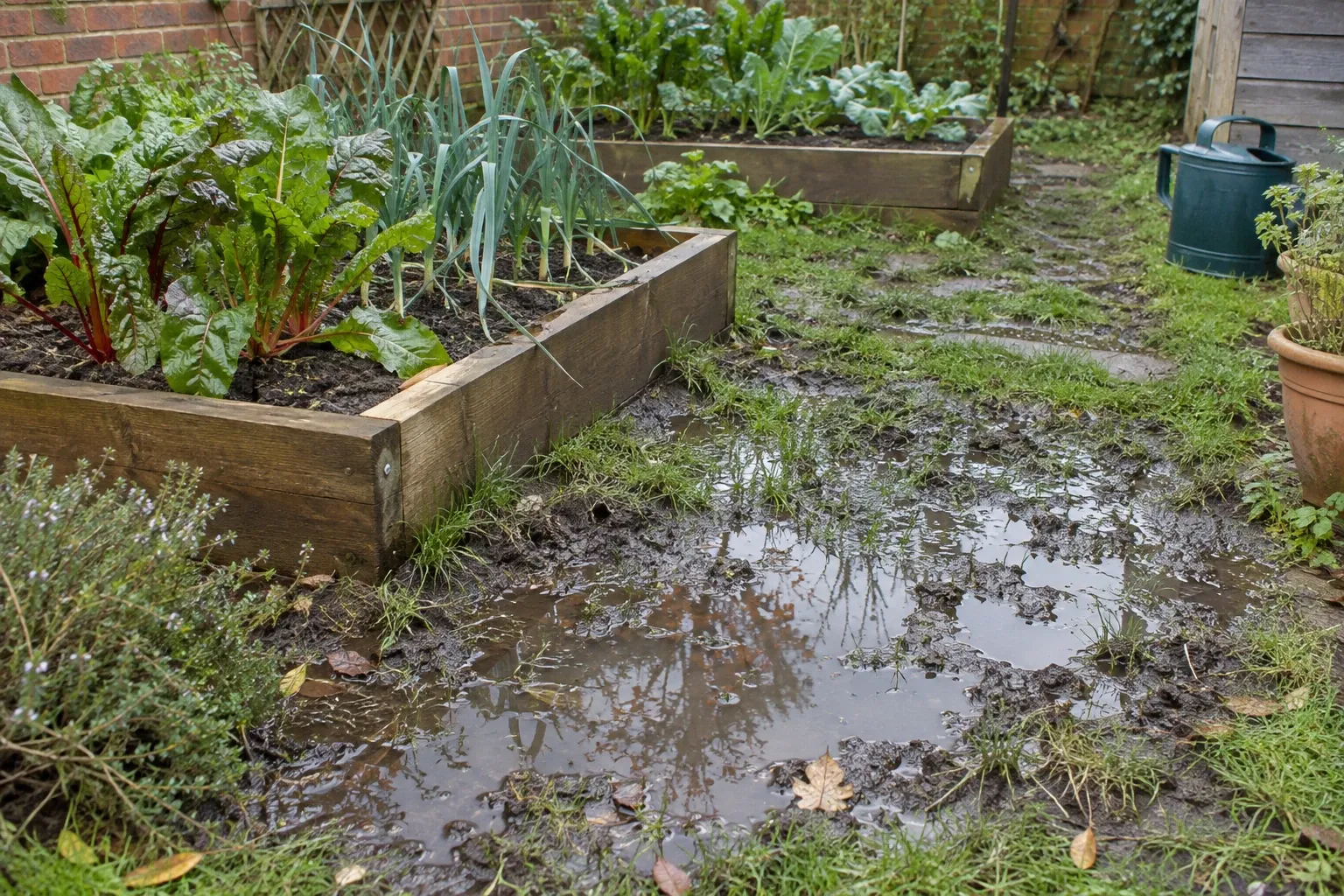
Water sitting on the surface isn’t just annoying; it starves roots of oxygen and weakens plants. Before you reach for perforated pipes or a soakaway, work out why your garden is holding water and where it could safely go. This guide takes you through quick checks, simple tests and lawful options for small UK gardens, patios and allotments, with pointers on when to seek professional advice and how to avoid creating problems downstream.
What does “waterlogged” look like and why does it happen?
When soil stays saturated, air is pushed out of the pore spaces and roots can suffocate; moss and algae often follow on lawns, and plants may yellow or die back. The Royal Horticultural Society explains these symptoms and why they occur when water drains away slowly after rain or flooding (RHS waterlogging advice; see also RHS on waterlogged lawns).
What should you check first?
- Where the water comes from: watch a heavy shower. Is runoff crossing from a neighbour’s higher ground, a path or drive? Are downpipes discharging at the base of walls?
- Soil type: heavy clay holds water much more than sandy or loamy soils; clay is widespread in parts of the UK and can swell and shrink with moisture (RHS on clay soils; background on clay shrink–swell from the British Geological Survey).
- Compaction: high footfall, mowing when wet or stored materials squash the soil structure so water can’t percolate; lawns on clay are especially prone.
- Levels and overflows: walk the garden with a long spirit level or string line. Aim to understand where water could flow by gravity without crossing on to a neighbour’s plot.
If you’re redesigning routes, it’s the right moment to think about circulation and falls as part of the whole layout; our overview on planning a practical garden explains how paths, beds and patios work together.
How do you test your soil and drainage?
- Quick spade test: dig a 30–40cm-deep hole, fill with water and see how fast it falls after you top it up. Slow fall suggests clay or compaction.
- Infiltration testing for soakaways: a quick garden hole test does not establish how a rainwater soakaway should be designed. If a soakaway is proposed, have its suitability and size assessed using the relevant rainwater drainage guidance; slow-draining soil may rule it out.
What rules limit what you can do with water?
- Drainage hierarchy: building guidance for England puts infiltration (soakaways, rain gardens) first where practicable, then discharge to watercourse, then to a surface water sewer; connection to a combined or foul sewer is lowest priority and controlled (Approved Document H, Rainwater drainage; see also the national SuDS hierarchy on GOV.UK).
- Paving front gardens in England: more than 5m² of hard surfacing is only permitted development if it’s permeable or drains to a permeable area within your boundary; impermeable paving may need planning permission (GOV.UK guidance on permeable front gardens).
- Sewer connections in England and Wales: connecting surface water to a public sewer is regulated under the Water Industry Act and typically needs the water company’s approval; you cannot discharge surface water into a foul‑only sewer (Water Industry Act 1991 s106; plain‑English context from Gov.Wales drainage guidance).
Planning and building rules vary across England, Scotland, Wales and Northern Ireland. Ask your local planning authority or water company which requirements apply before you dig.
Which fixes match the problem?
-
Compaction on lawns or beds
- Aerate and topdress: hollow‑tine in autumn, brush in sand/loam topdressing; keep traffic off wet ground. This improves pore space so water moves down.
- Add organic matter to beds: incorporate well‑rotted compost in spring; avoid working clay when wet to prevent smearing.
-
Runoff from hard surfaces
- Swap to permeable surfaces or direct to a soak‑through area inside your boundary to meet the applicable rules on domestic paving (GOV.UK permeable surfacing detail). When you plan routes, consider using paths that connect key spaces and can be laid permeably.
-
Downpipes discharging onto soil
- Fit a short rill or channel drain to a soak‑through bed or rain garden, if your percolation test shows infiltration is feasible. Keep features away from foundations and boundaries per local guidance, and never direct extra water to a neighbour.
-
Whole‑plot clay with poor infiltration
- Raise the growing level with organic‑rich topsoil and plant selections that tolerate winter‑wet; redesign beds and lawn proportions so the wettest zones become planting, not footfall. In tight spaces, ideas for making a small garden easier to use can help you re‑site seating or paths onto drier ground.
-
Considering land drains or a soakaway
- Only where water has somewhere lawful to go and appropriate infiltration testing supports it. Obtain professional advice on suitability and sizing; Approved Document H provides the rainwater drainage context for England.
How do you put the fix in place, step by step?
- Map flows and levels
- After heavy rain, mark puddles; use a line level to confirm natural falls. Decide where you can safely hold or infiltrate water within your boundary.
- Improve soil where people won’t walk
- Fork‑loosen compacted spots in early spring, add 5–7cm compost as mulch, and let worms do the mixing; keep off saturated ground to avoid re‑compaction.
- Make surfaces permeable or redirect them
- Replace impermeable strips that shed water towards beds with permeable setts or gravel on a free‑draining base, keeping within the permeable surfacing rules.
- Test before you dig any soakaway
- Arrange an appropriate infiltration assessment before committing to a rainwater soakaway; if infiltration is too slow, consider a surface or planting solution with suitable advice.
- If connecting to sewers is proposed
- Speak to your water company first; connection is regulated and surface water cannot be discharged to a foul‑only sewer (Water Industry Act s106; overview from Gov.Wales).
When should you seek professional advice?
- Standing water close to house walls or over a large area through winter.
- Conflicting levels with neighbours’ plots or public footpaths.
- Any plan to connect to a sewer, alter existing drainage, or build a soakaway near structures; these fall under building and water regulations.
How will you know it worked?
- After the next few downpours, the same patches should clear faster and plants should show firmer growth. Lawns should feel less spongy and moss should ease if compaction was the driver.
- Keep a simple rain and puddle diary for a month. If water still lingers and your test pit shows poor infiltration, pivot to designs that hold and use water on the surface (rain gardens, permeable paths and raised beds) with regard to the drainage rules that apply locally.