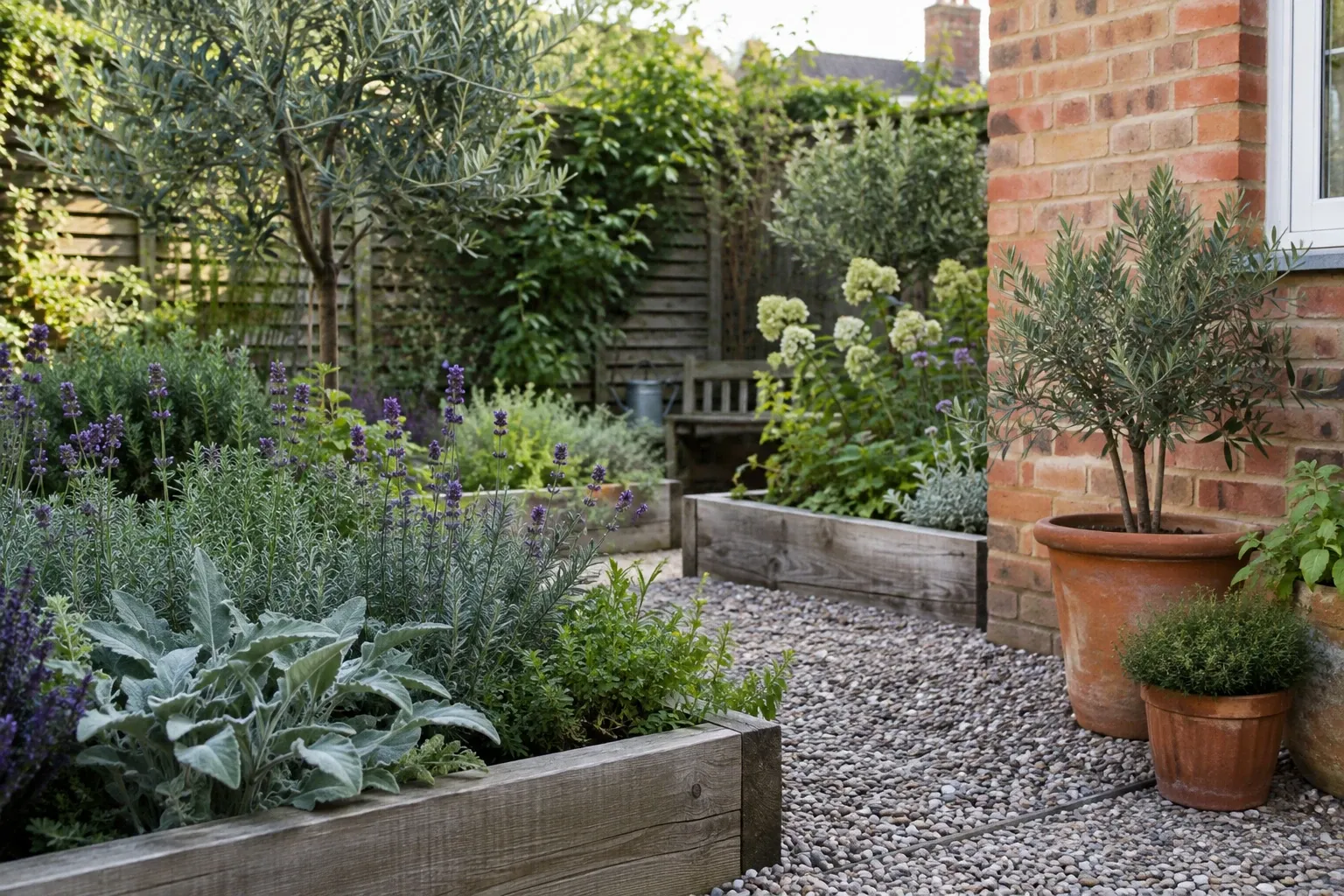
“Low maintenance” doesn’t mean no maintenance; it means the work fits your time and the site. Start by matching planting to your soil and exposure, keeping access simple and sizing any lawn to what you actually mow. Then use techniques that prevent work building up, like mulching and permeable hard surfaces. This page walks you through practical criteria, side‑by‑side options and steps to put them in, with UK seasons and rainfall in mind.
What does “low maintenance” really mean for your plot?
It’s about fewer routine jobs per week, not zero work. If beds are mulched to suppress weed germination and slow water loss, you hoe and water less; that’s the point of mulching according to the Royal Horticultural Society, which notes that a sufficiently thick layer cuts light to weeds and reduces evaporation (RHS guidance on mulches).
A simpler path network and right‑sized lawn also matter. Where you hard‑surface areas, keep them permeable so rain soaks away rather than pooling and washing silt across beds; government guidance explains that front gardens over 5 m² need planning permission if surfaced with non‑permeable materials, while permeable surfacing is permitted without it (GOV.UK permeable surfacing guidance). If drainage is a recurring issue, read about why a garden stays waterlogged.
The criteria that actually reduce work
- Right plant, right place: choose plants that suit your soil, sun and wind so they establish and need less intervention. The RHS notes autumn planting helps new root systems settle as soils cool and rainfall returns (RHS Gardening in a Changing Climate).
- Mulch depth and coverage: keep bare soil covered after planting to block annual weeds and retain moisture, as set out in the RHS mulch advice.
- Manage water demand: design for areas that don’t need frequent irrigation. Waterwise and the RHS advise prioritising plant choice and soil improvement over routine hose use, and note that established lawns generally cope with dry spells without watering (Waterwise x RHS water‑saving tips).
- Simple, permeable access: limit path mileage to what you need for mowing and pruning; choose permeable gravel or pavers on a free‑draining base to reduce puddling and algae build‑up, in line with GOV.UK permeable surfacing principles. For layout ideas, see how to plan a practical layout for a UK garden and later, choose paths that connect your garden.
Plants, surfaces and lawn: options side by side
| Area | Lower‑work option | Why it helps | When to choose |
|---|---|---|---|
| Beds & borders | Mixed shrubs with groundcover perennials, mulched | Fewer gaps for weeds; once established, shrubs need seasonal pruning, not weekly deadheading. Mulch reduces watering and hoeing. | Suits most small/medium gardens with average drainage. |
| Sunny, free‑draining spot | Drought‑tolerant planting on gravel mulch | Plants matched to dry conditions need less watering; autumn planting aids establishment. | South and east England often face drier summers; add wind shelter if exposed. |
| Shady, damp area | Ferns, hostas, evergreen groundcovers with bark mulch | Shade‑tolerant plants fill the soil surface; organic mulch suppresses annual weeds. | North‑facing beds, under trees with managed root competition. |
| Paths & sitting | Permeable gravel or open‑joint pavers on free‑draining base | Limits run‑off and algae, and avoids permission issues on frontages >5 m². | Use where you want easy upkeep and good drainage. |
| Lawn | Right‑sized, simple shape; leave edges straight | Less mowing and edging time; during dry spells you can pause watering as established turf usually bounces back. | Small rectangles you can cross with one or two passes. |
How to put the choices into practice
-
Map the jobs you do now. Note what you mow, edge and water every week in summer. Use that to decide where a bed, path or small terrace would save time, then plan a practical layout.
-
Plant in the right season. Prioritise autumn for most trees and shrubs so roots establish in cooler, wetter conditions and need less watering the following summer.
-
Mulch immediately after planting. Weed, water in, then mulch bare soil to the thickness recommended by the horticultural guidance so light can’t reach germinating weeds and moisture is conserved.
-
Keep access permeable. Build paths with a compacted, free‑draining sub‑base and permeable finish, especially on frontages where non‑permeable hardstanding over 5 m² would otherwise need permission.
-
Plan for dry spells. Choose plants suited to your rainfall and soil, and remember you can let established lawns brown and recover without routine watering, focusing limited water on new plantings.
How to tell it’s working (and what to tweak)
- Time saved: mowing and edging should take fewer, longer passes on a simpler lawn; mulched beds should need less weekly hoeing as fewer annual weeds appear.
- Water use: new plantings need watering to establish, but overall summer watering should drop as right‑plant choices root in and permeable paths reduce runoff that can leave beds dry at the edges.
- Plant performance: by the second growing season after autumn planting, shrubs and groundcovers should fill their space with less intervention, aligning with the principle that establishment improves when roots develop in cooler, wetter months.