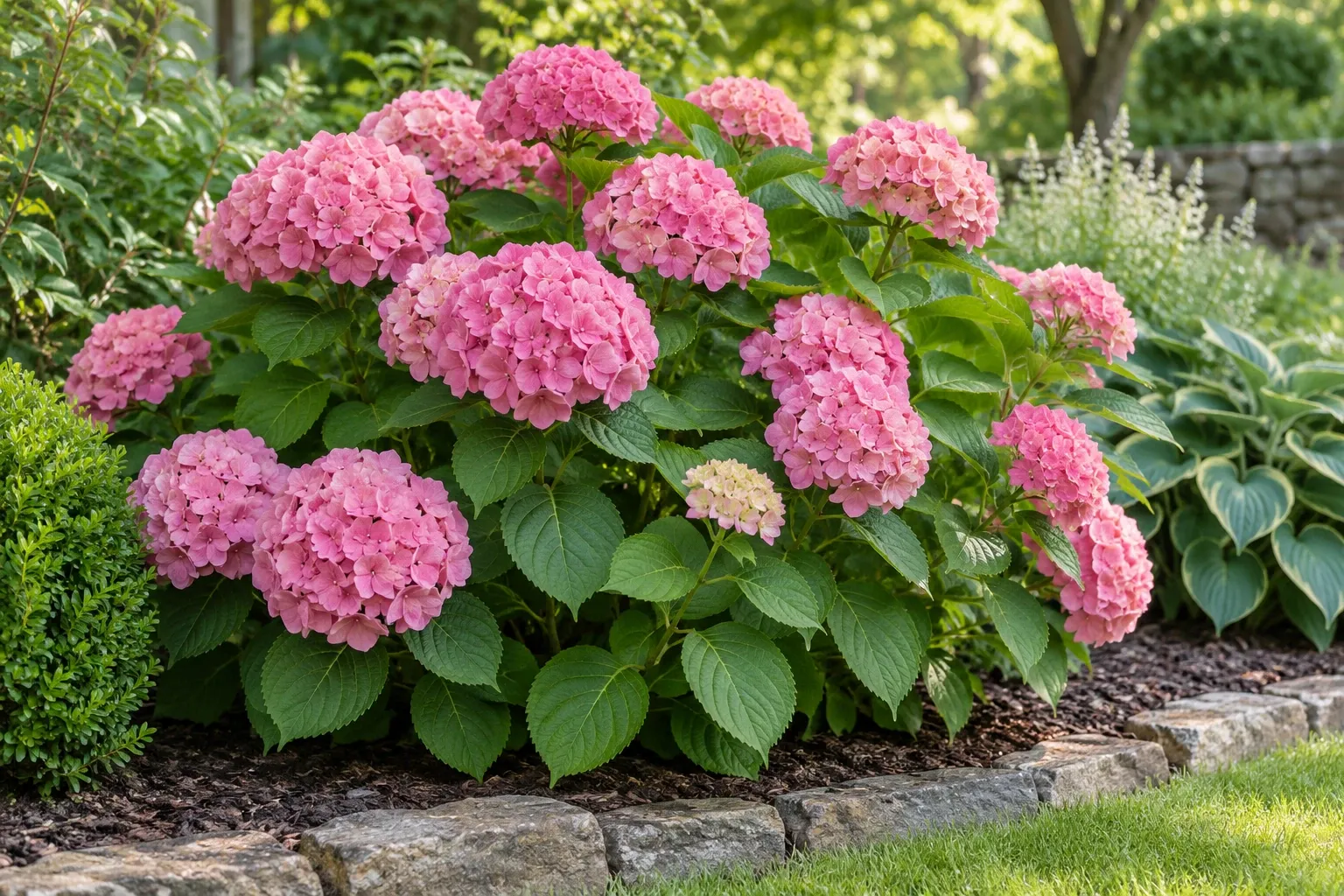
If you have seen a rounded hydrangea in a garden centre, you may be looking for a hortensia: a type of hydrangea commonly known for its full, mophead flowers. The right choice depends on more than flower colour. Check how much room you have, whether the soil stays moist, how sunny the site is and whether you want to prune each year.
Which hortensia suits your space?
“Hortensia” is commonly used for mophead hydrangeas: bushy, deciduous shrubs with rounded flower clusters. The Royal Horticultural Society describes these plants as compact in form, but the mature size varies by cultivar, so check the plant label before buying. A plant that fits a small pot now may need more room as it grows.
Choose the flower shape and growth habit that work for your garden. Mopheads have rounded flower heads; lacecaps have a flatter centre of small flowers surrounded by larger florets; panicle hydrangeas produce cone-shaped clusters. The RHS guide to shrubby hydrangeas outlines these differences. If your border has limited space, look for a named compact cultivar rather than relying on the general name “hortensia”.
A mophead is a natural choice if you want rounded blooms and can leave its previous year’s stems largely intact. If you prefer cone-shaped flowers or want to prune back more firmly in spring, consider a Hydrangea paniculata instead. For example, the RHS lists one panicle hydrangea profile with a potential height of 2.5–4 metres and spread of 1.5–2.5 metres, so check the exact cultivar before allowing for it in a small garden.
What growing conditions does it need?
Aim for light or partial shade and soil that holds moisture without becoming waterlogged. Hortensias can also grow in a sunnier position if the soil does not dry out, but a hot, exposed spot can make consistent moisture harder to maintain. Shelter matters in spring: new growth and flower buds can be damaged by late frost, so avoid frost pockets and exposed positions where possible.
Check the soil before choosing a flower colour. For some blue-flowered hydrangeas, the RHS gives a soil pH of 4.5–5 for maintaining blue blooms; pH 7 is neutral. On less acidic soil, these flowers can appear purple or pink instead. Colour depends on the cultivar and growing conditions, so do not assume that changing the soil will produce an exact shade. If your ground is strongly alkaline or visibly chalky, a pot with peat-free ericaceous compost may be more manageable than trying to alter a border.
Spacing also needs to reflect the plant’s eventual vigour. The RHS gives a general planting range of 90 cm to 2.4 m for shrubby hydrangeas, and advises checking the label for the chosen plant’s mature size. That range is not a one-size-fits-all spacing rule: use the cultivar’s expected spread, the space available and whether you want neighbouring plants to meet as they grow. For help with the wider jobs of assessing soil, light and garden space, use practical garden care basics.
When and how should you plant it?
Spring or autumn is generally the best time to plant a shrubby hydrangea. Container-grown plants can be planted at other times if the ground is not frozen, very wet or excessively dry, but planting during a dry spell means you will need to keep a closer eye on watering. In colder or more exposed parts of the UK, avoid planting where tender spring shoots are likely to meet late frost.
Before digging, water the plant in its pot. Make a hole as deep as the rootball and about three times as wide, then set the shrub so that the compost surface sits level with the surrounding soil. Planting too deeply can cause problems, so use the pot’s compost line as your guide. Firm the soil around the roots, water in, and add an organic mulch to help the soil retain moisture. Keep the mulch about 10–15 cm clear of the stems.
If the soil is chalky, mix organic matter into the planting area to improve its growing conditions. Avoid piling amendments into a small, isolated planting hole without preparing the surrounding ground; roots will spread beyond it. When planning other seasonal planting, make sure each plant has room and suitable conditions. For a different spring display, plant hyacinths for seasonal colour.
How do you care for it through the year?
Water newly planted hydrangeas as needed through their first growing season, particularly when there has been little rain. The RHS suggests checking for a dry spell of 7–10 days from spring to summer as a cue to water, while noting that mature plants also benefit from water during hot, dry periods. Treat this as a prompt to check soil conditions, not a fixed watering timetable: rainfall, soil and exposure all affect how quickly the roots dry out.
A layer of mulch helps reduce moisture loss. The RHS describes mulch as a layer at least 5 cm thick; keep it away from the stems and renew it as it breaks down. Container plants need more frequent checks because their compost can dry more quickly, especially in summer. Move a pot to a shadier position during hot weather if it is drying out too quickly, and make sure excess water can drain away.
Established hydrangeas usually do not need regular feeding. Too much fertiliser can encourage leafy growth at the expense of flower buds, and soft growth is more vulnerable to frost. If a plant is struggling, check moisture and soil conditions before adding feed. For blue-flowered cultivars, rainwater is preferable when available to help retain colour, but use tap water rather than allowing the plant to become drought-stressed.
When should you prune a hortensia?
With a mophead or lacecap hydrangea, do not cut all the stems down in autumn. The faded flowers can remain over winter, giving some protection to the tender growth buds beneath. In mid-spring, remove the old flower heads by cutting back to the first or second strong, healthy pair of buds. This timing also lets you see whether frost has damaged any shoots before deciding what to remove.
Established mopheads and lacecaps generally need only light pruning. The RHS advises removing one or two of the oldest stems at the base to encourage replacement growth; heavy pruning can mean losing flowers because blooms form on shoots growing from the previous year’s stems. If you need to renovate an overgrown plant, know that cutting every stem to the base removes that summer’s flowers, and new stems will not bloom until the following year.
Panicle hydrangeas are pruned differently: they can be cut back in early spring to a framework of healthy buds. The RHS hydrangea pruning advice says a low framework is usually no more than 25 cm high, while a taller framework can be left at about 60 cm. These figures apply to that pruning approach, not to mophead hortensias. Check the plant’s identity before cutting.
How can you tell if the choice is working?
Look for steady growth and soil that stays moist without remaining waterlogged. In hot or dry spells, check the soil around the roots and the compost in pots rather than judging by the leaves alone. A newly planted shrub may take time to settle; avoid repeatedly changing its position or adding feed in response to one poor flowering season.
Review the fit of the plant as it grows. If it is crowding a path, wall or neighbouring plants, compare its spread with the cultivar’s label and consider whether pruning or moving it is appropriate. Note when it flowers and how its colour responds to the soil. A blue-flowered plant turning pink or purple may reflect the site’s pH rather than a care failure. Most of all, keep the plant’s type in mind: the right pruning, moisture and space depend on whether you have a mophead, lacecap or panicle hydrangea.