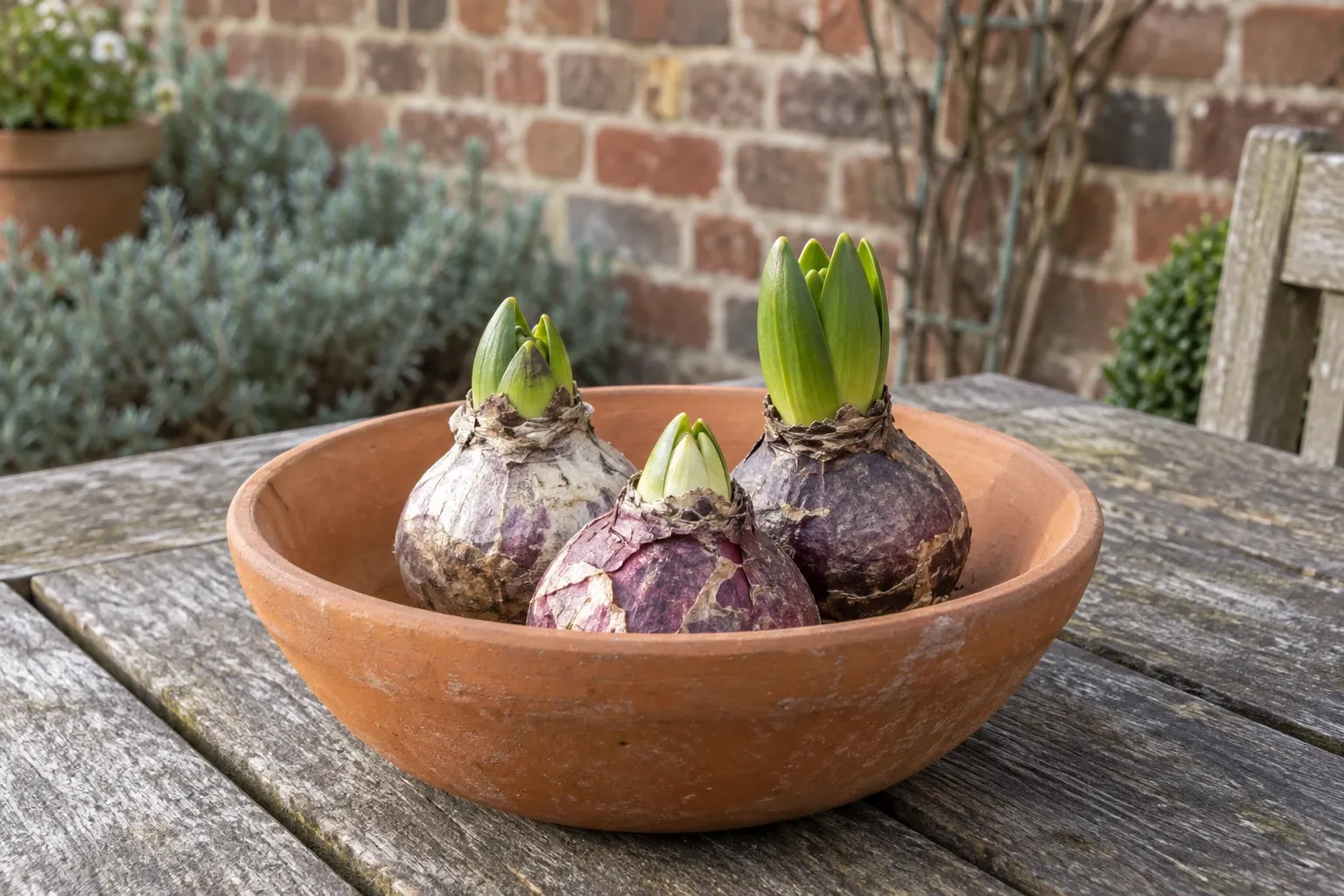
A packet of hyacinth bulbs can promise a strong burst of colour and scent, but where you plant them affects how well they fit your garden and how much attention they need. A sunny, free-draining border suits bulbs you want to leave outside; a container gives you more control over drainage and placement, especially on a patio.
Where will hyacinths grow best?
Hyacinths suit borders and containers, and their fragrance makes a position near a path or doorway especially enjoyable. For bulbs that will stay in the ground for several years, choose a sunny place with well-drained, moderately fertile soil. They can flower in partial shade for a one-off display, but may perform less well in later years if left there. The RHS hyacinth growing guide recommends sun or partial shade and good drainage, and notes that bulbs can rot in excessively wet soil.
Before planting, check where water gathers after rain. Avoid a spot that stays waterlogged through winter; if your soil drains poorly, a container with drainage holes gives you more control. You can also make the display work in a compact garden by placing a pot beside a door or along a route, rather than using valuable bed space. Think about how the planting will look once the flowers fade, too. A broader layout can help you decide where a seasonal pot belongs alongside paths and other planting; the ideas for making a small garden work harder may help you assess that space.
When should you plant hyacinths?
For spring flowers outdoors, plant ordinary garden hyacinth bulbs in early autumn. They typically flower in March and April. If you are planting in October, get them into the ground promptly rather than leaving dormant bulbs in storage. The RHS advises that specially prepared bulbs for Christmas flowering should be planted in September and given 10–12 weeks for roots and shoots to develop. Those are heat-treated for an earlier indoor display, so check the label rather than treating them like ordinary outdoor bulbs.
The choice is straightforward: use standard bulbs for an outdoor spring display, or buy “prepared” bulbs when your aim is indoor flowers around Christmas. Prepared bulbs are also suitable for containers, but their early flowering depends on the treatment and timing described on the packet. For other garden tasks that share the same seasonal planning, the basics of caring for a UK garden include assessing your soil, exposure and available time.
How deep and far apart should you plant the bulbs?
In a border, plant each bulb with its pointed end facing upwards, about 10 cm deep, with at least 7.5 cm between bulbs. These measurements give each bulb room while keeping the planting compact enough for a group display. Water after planting to settle the soil around the bulbs. If you are planting a larger group, space them evenly rather than arranging them in a straight line; a loose cluster often looks more natural among existing plants.
In a container, use the same depth and approximate spacing. The RHS suggests planting at least three to five bulbs together for a fuller display. Choose a pot with drainage holes, since standing water is a particular risk in a small volume of compost. To improve drainage, the RHS recommends either peat-free multipurpose compost or a mix of two parts John Innes No. 2 compost and one part grit. Raise a large container on pot feet or bricks so water can escape from underneath.
Should you choose a border, a pot or an indoor display?
A border is a good choice if you have suitable soil and want the flowers to return in the same place. A pot works better when you need to control drainage, move the display, or add colour to a patio or doorstep. Hyacinth flowers can be strongly scented, so consider how close you want them to a seating area or entrance before choosing the spot.
For a Christmas display indoors, use prepared bulbs and follow the supplier’s planting directions. The RHS explains that hyacinths can also be grown in special bulb vases: the bulb sits above the water, with the water level just below its base. Its advice on bulbs for Christmas flowering describes this vase method and recommends gloves when handling hyacinth bulbs because they can irritate the skin. For an indoor display in compost, a pot with drainage is the simplest option; use bulb fibre if your decorative container has no drainage holes.
How do you plant and care for hyacinths?
Start by choosing firm bulbs without obvious signs of damage or disease. Loosen the soil, remove weeds and stones, and check that it is not saturated. Plant each bulb pointed end up at the appropriate depth, cover with soil or compost, and water to settle it in. For containers, keep the bulbs spaced rather than touching and make sure excess water can drain away.
After flowering, remove the flower stalk at its base, but leave the leaves in place. They help replenish the bulb, so let them yellow naturally rather than cutting them off while green. Water and feed outdoor plants while the foliage remains active, then allow the bulbs to rest as the leaves die back. If you keep them in the ground, the flowers may be smaller in subsequent years; adding a few new bulbs in autumn can refresh the display without replacing every bulb.
What should you check when the display appears?
If bulbs produce leaves but few flowers, check their growing conditions and history before changing your routine. Wet soil can cause bulbs to rot, while a shady position may reduce flowering. A container that remains cold and waterlogged is more vulnerable than a well-drained border, so check its drainage and shelter it during severe winter weather. In indoor displays, a room that is too warm can lead to weak stems or flowers opening before the flower stalk has risen above the leaves; moving the pot to a cooler room can help.
Finally, remember that hyacinths are ornamental plants, not edible bulbs. Wear gloves if handling them irritates your skin, and keep bulbs and foliage away from anyone likely to eat them. With a suitable planting spot, the right bulb type and a little patience after flowering, you can enjoy the spring display without needing to dig the bulbs up each year.