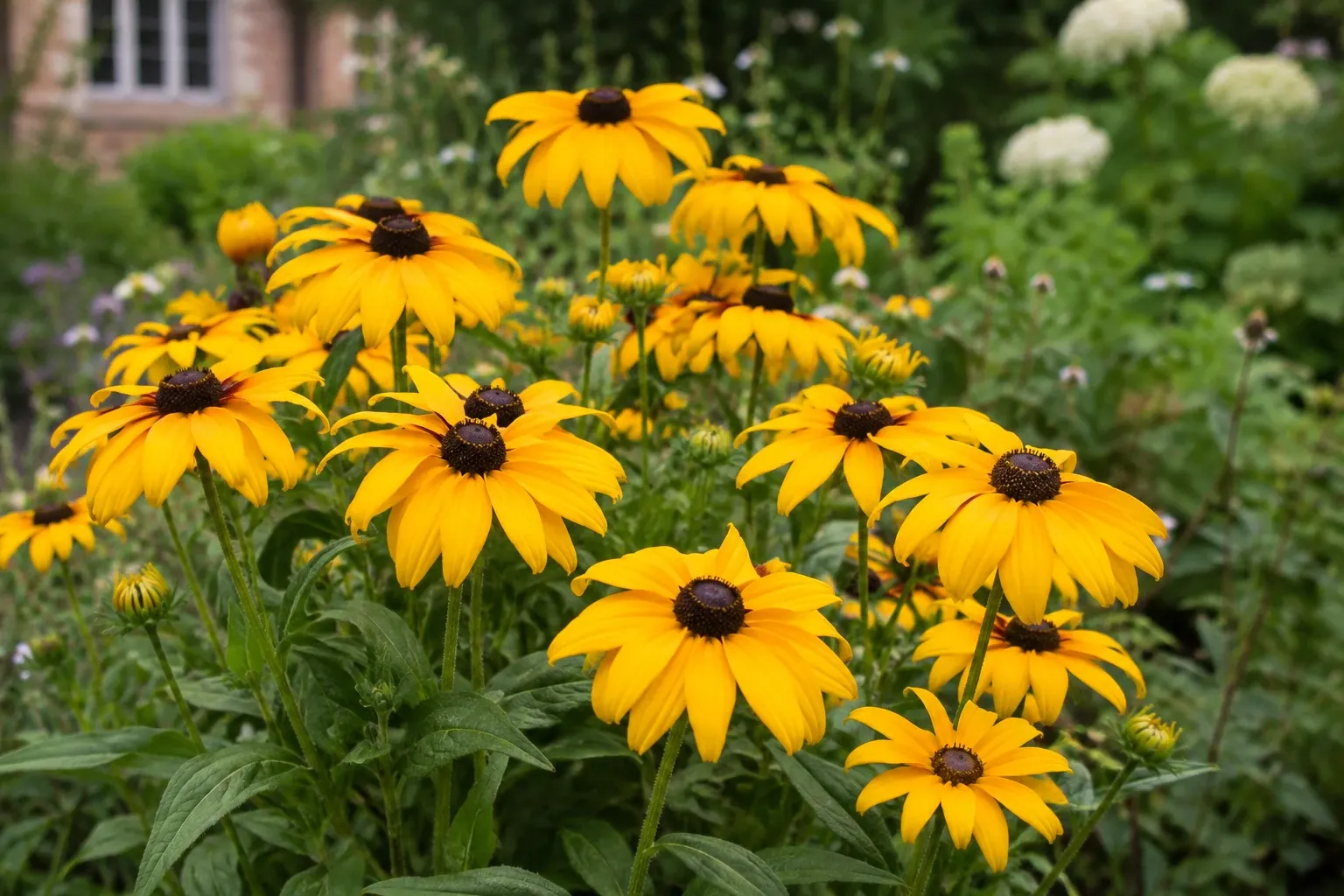
When you search for flower types, you may be looking for a quick summer display, flowers that return each year, or colour for a shady corner. These are different decisions: a plant’s life cycle does not tell you where it will grow well or when it will flower. Start by considering how long you want it to last, how much sun the site gets and which months you want flowers. Then check the plant’s mature size and local growing conditions before you buy or sow.
Which flower types solve different garden problems?
“Flower types” can mean two different things: how a plant lives, or what its flowers look like. For choosing plants, the life-cycle groups are the more useful starting point. Annuals, biennials and perennials describe how long a plant takes to complete its life cycle; bulbs describe an underground storage structure, and shrubs are woody plants. These categories are not all alternatives to one another: a bulb can also be a perennial.
An annual completes its life cycle in one growing season. It is useful when you want colour in a bare border or container without committing to a permanent planting. A biennial grows leaves in its first year and usually flowers and sets seed in its second. A perennial can live for several years, so it is a better fit for a lasting border, although it may die back above ground in winter. The RHS guide to annuals and biennials gives examples including cosmos, sunflowers and foxgloves, and notes that many annuals and biennials flower from late spring into autumn.
Bulbs, corms, tubers and rhizomes are different kinds of underground storage organs; gardeners often use “bulb” as a broad label for them. Spring-flowering bulbs such as daffodils are commonly planted in autumn, while planting time for other bulbs varies with their flowering season. The RHS bulb-growing guide advises planting spring-flowering bulbs in September or October and tulips in October or November. Check the instructions for the particular plant, especially if you are planting a tender type or bulbs bought already growing.
What should you check before choosing flowers?
Match a plant to the conditions you actually have, not just to a photograph or a flowering-month label. Note how many hours of direct sun reach the site, whether the soil drains freely or stays wet, and whether the spot is sheltered from wind. For a patio, check the mature height and spread against the container and nearby plants. In a narrow bed, tall flower spikes may provide height but can shade smaller neighbours.
Then decide how much ongoing work suits you. Annuals often need sowing or replacing each year, and young plants may need watering while they establish. Perennials can form the framework of a border but need enough room to grow. Bulbs usually occupy a smaller footprint for much of the year, though their leaves need to remain until they have naturally died back. Shrubs offer woody structure as well as flowers, but need space for their mature size and may require pruning.
Flowering seasons are approximate, not guarantees. UK weather varies between regions and from year to year, and a late frost can affect tender plants. Treat a plant’s stated season as a guide, and check local conditions before sowing or planting outside. If you are planning your first bed, begin with the basics of assessing your garden’s conditions before choosing a mix of flowers.
Which flowers suit sun, shade and different seasons?
For a sunny border or large pot, annual cosmos is one option for summer flowers. It grows best in full sun and ordinary soil that is not waterlogged; it will not flower in shade, according to the RHS. Sow or plant it where it has room to develop, and use growing cosmos for a summer display as a practical next step. Other annuals can offer colour later in the season, but check whether the variety is hardy or tender: tender plants may need protection from frost and should not be planted outside until conditions are suitable locally.
For a lighter, partly shaded spot, foxgloves can add vertical interest. They may be biennial or short-lived perennial, and the RHS foxglove guide says they prefer dappled shade and free-draining soil enriched with organic matter. Allow room for the leafy rosette as well as the eventual flower spike. Its growing guide recommends spacing young plants 30–35 cm apart. Foxgloves are toxic if eaten, so site them where children and pets are unlikely to handle or ingest them.
To bring flowers into the colder months, consider snowdrops in a suitable garden spot. The Woodland Trust lists their usual flowering season as January to March and their height as around 7–15 cm. They favour damp soil and are often found in broadleaved woodland. These small flowers work best where they can be seen rather than hidden behind taller planting. For later spring, bluebells are another seasonal bulbous perennial, but check the plant’s identity and local guidance before introducing them; the UK’s native bluebell is distinct from Spanish bluebell and hybrids.
A mixed planting can extend interest across the year: early bulbs, followed by spring or early-summer biennials and perennials, then summer annuals. Do not assume every plant in a category flowers in the same months. Look up the named species or variety and leave gaps for mature growth rather than packing a new border tightly at planting time.
How can you put the choice into practice?
- Sketch the bed or container and note its sun, shade, drainage and exposure to wind.
- Choose the job each plant should do: early colour, a summer display, height, ground cover or flowers that return.
- Select a manageable mix of life cycles. For example, combine a few perennials for structure with annuals to fill open spaces while the permanent plants establish.
- Check the plant label or a reliable growing guide for mature height and spread, flowering season, hardiness and planting instructions. Use metric measurements to compare the plant’s eventual size with the space available.
- Plant or sow at the time recommended for that species, taking account of local frost risk. Water newly planted flowers as needed while they establish, and keep labels until you recognise the plants.
Avoid choosing solely by flower colour. A plant that needs full sun is unlikely to be a good choice for a dark corner, however well its colour fits your scheme. Likewise, an attractive annual is not a low-effort permanent solution if you want the same plants to return without resowing.
How do you check whether the planting is working?
Review the display through the growing season rather than judging it on planting day. Note which areas stay empty, which plants outgrow their space and whether flowers appear in the months you wanted. If a plant makes leaves but few flowers, check its light and growing conditions before adding feed or replacing it; insufficient sun, unsuitable soil or overcrowding can all be relevant.
Keep a simple record of what you planted and when it flowered. This helps distinguish a plant that is naturally short-lived from one that failed to establish, and makes it easier to adjust next year’s mix. Replace only the gaps that matter: a compact garden does not need every patch of soil in flower at once. A few well-matched annuals, perennials and bulbs can give a small space a changing display without making maintenance harder than necessary.