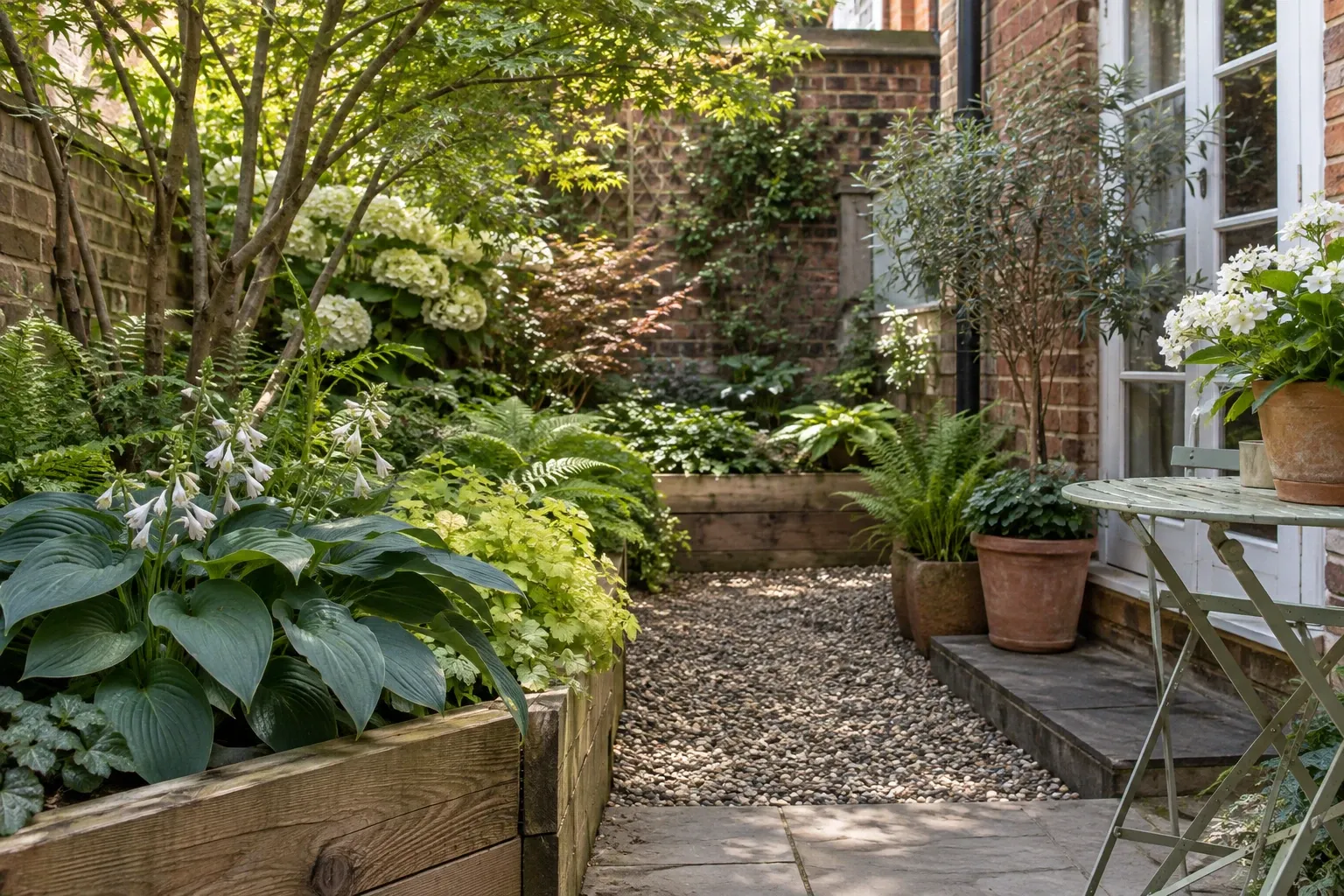
If your back door opens to a cool, shaded space for much of the day, you’re not stuck with gloom. North-facing gardens in the UK get little direct sun near the house, but light shifts with season, structures and trees. By mapping when and where sun reaches, testing how wet or dry the soil stays and choosing plants matched to those spots, you can build a layout that feels welcoming and grows well without constant firefighting.
Where does light fall through the year?
In UK gardens the sun tracks across the southern sky, so north-facing areas tend to be cooler and shadier, especially close to the house. That’s because aspect strongly affects how much sunshine a surface receives, with north-facing slopes getting less than south-facing ones, as explained by the Met Office’s climate factsheet for the British Isles (Met Office). The Royal Horticultural Society (RHS) defines aspect and notes that north-facing sites are generally colder and shadier, and that nearby walls or fences can change the feel by reflecting or trapping warmth (RHS microclimates).
Make a quick light map: on a bright day, sketch the plot and shade in areas of direct sun at 09:00, 12:00 and 15:00. Repeat in April/May and again in July when the sun is higher. This shows the lighter edges where you can place seating or sun‑loving pots, and the persistent shade near boundaries where shade plants will cope best.
If you’re also planning paths, beds and sitting areas, fold this light map into a simple layout so movement and planting work with what the site offers. You’ll find a step‑by‑step way to do that in our guide to plan a practical layout.
Is the shade dry or damp?
Not all shade is the same. North‑facing borders beside walls or under eaves often stay dry because rain is deflected, while tree roots compete for water; the RHS groups these as “north‑facing (sunless) drier borders” and suggests suitable planting for them (RHS wall‑side borders). In contrast, shade at the foot of a slope or in heavy clay may remain cool and moist for long periods.
Simple checks help you tell them apart:
- After steady rain, dig 15–20 mm with a trowel. If soil glistens and smears easily hours later, you have damp shade; if it’s crumbly and dust‑dry beneath the surface, it’s dry shade.
- Look for rain shadows under fences and around conifers; canopy drip lines can leave a doughnut of dry ground in summer.
- If water lingers for days, diagnose causes like compacted subsoil or blocked outlets; see how to find why a garden stays waterlogged before planting moisture‑sensitive species.
What should go where in a north‑facing plot?
Think in zones, matching use and plants to light and moisture.
- Near the house (deep shade, often dry): keep tall plantings minimal to preserve daylight indoors. Use structure from shade‑tolerant evergreens, textured foliage and ferns. The RHS provides curated plant ideas for shade, including options for dry and moist conditions (RHS shade planting).
- Mid‑garden (dappled shade to bright shade): this is prime territory for many perennials and shrubs that dislike scorching sun but still want decent light. Mix spring bulbs that flower before overhead leaves thicken with summer texture.
- Far end or open side (the day’s brightest patch): place seating here to catch the longest light run. Reserve this zone for any sun‑hungry containers or a small edible bed if light proves reliable.
Reliable plant ideas for dry and damp shade
Use plant lists as a starting point, then pick cultivars you like the look of.
- Dry shade picks: Look to RHS shortlists for north‑facing dry borders, where tough ferns, epimediums and evergreen groundcovers are highlighted for wallsides that see little direct rain.
- Damp to moist shade picks: The RHS shade guide covers perennials, bulbs and shrubs that enjoy cool soils, along with Award of Garden Merit (AGM) choices that have proved reliable in UK trials.
If you prefer to search by your exact conditions, the RHS plant selector lets you filter by aspect (choose “north‑facing”) and soil moisture to generate a tailored shortlist (RHS plant search).
Lay out seating and paths so the garden feels brighter
- Put the main seat or bench in the brightest end of the plot, with a secondary perch nearer the house for morning coffee on brighter days.
- Keep routes simple and light‑toned. Pale gravel or sawn stone reflects available light; avoid glossy surfaces that glare when the sun does appear.
- Use verticals sparingly near the house. Trellis and climbers can be set a little further out to avoid blocking the limited sky light.
If you want the scheme to need less weekly clipping and deadheading, borrow ideas from our notes on a garden that asks for less upkeep.
A five‑step way to put this into practice
- Confirm aspect and note obstructions. Use a compass; record fences, large shrubs and neighbouring buildings that cast shade, as advised in RHS site‑assessment guidance (RHS site assessment).
- Map light in spring and summer. Mark 09:00, 12:00 and 15:00 sun patches on a base plan; the Met Office explains why seasonal sun height changes how far light reaches in UK gardens.
- Test soil moisture after rain and in a dry spell to separate dry from damp shade.
- Place seating and paths in the brighter runs; reserve dry‑shade borders for foliage texture and damp‑shade beds for lush planting.
- Choose plants via the RHS selectors for “north‑facing” and your soil moisture, favouring AGM selections for reliability.
How to check if it’s working
- Through one full year, photograph the same viewpoints monthly at midday to track light and growth.
- Note plant performance: fewer flowers or pale, weak growth can mean too little light; scorched leaves can mean the odd hot afternoon reaches further than expected — move or swap plants accordingly. The RHS stresses that aspect and nearby structures create microclimates, so fine‑tuning is normal.
- After heavy rain, watch surface water. If puddles persist, address compaction or outlets before adding more plants in those beds; see our guide to why a garden stays waterlogged.
A north‑facing garden will never mimic full south sun, but with light‑aware layout and plants matched to dry or damp shade, it can feel calm, green and inviting for most of the year.