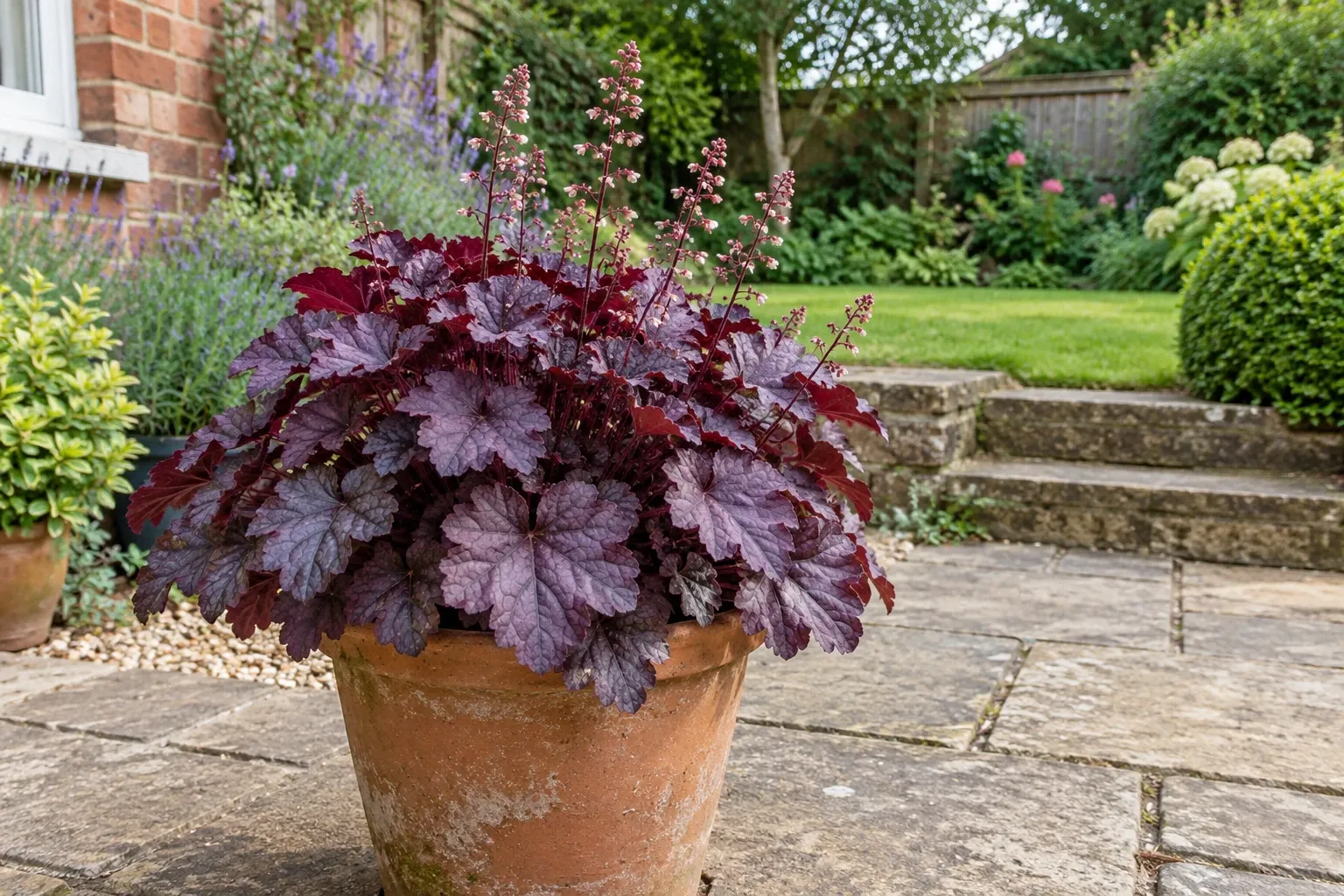
A coral bells plant can brighten a small border, the edge of a path or a patio pot when flowers are scarce. In the UK, you will usually find it labelled Heuchera: the foliage may be lime, silver, bronze, purple or nearly black, while the flower stems rise above the leaves in season. The best choice depends less on the name “coral bells” than on your site’s light, drainage and the leaf colour you want to keep looking good.
What does a coral bells plant look like?
“Coral bells” is a common name for Heuchera, a group of clump-forming perennials grown mainly for their leaves. The name also suits their small, bell-shaped flowers, which appear on slender stems above the foliage. In a compact garden, the leaves often do more of the work: they provide colour and texture near the front of a border, in a raised bed or in a container.
There is plenty of variety. The RHS describes several hundred Heuchera cultivars, so the label matters: different selections can vary in leaf colour, pattern, flower colour and tolerance of sun. Some cultivars listed by the RHS have a height and spread of 0.1–0.5 metres, but check the label for the specific plant you are buying rather than treating that range as a guarantee for every Heuchera. (rhs.org.uk)
Which Heuchera suits your garden?
Start with the light where the plant will actually grow. Most Heucheras do well in partial or dappled shade. Dark-leaved cultivars may tolerate a sunnier position, while pale leaves are more liable to scorch in strong summer sun. A bright spot with some shelter from the hottest afternoon rays is a sensible starting point if you are unsure which cultivar you have. The RHS notes that strong summer sun can scorch and crinkle foliage, particularly on paler-leaved plants. (rhs.org.uk)
Next, assess drainage. Heuchera likes soil that holds some moisture but drains freely; a site that stays soggy is a poor fit, especially over winter. If water sits in your border after rain, a raised bed or container may make it easier to provide the drainage the plant needs. For broader advice on matching plants to conditions and keeping up with routine care, see how to start and care for a garden.
Choose leaf colour with the surrounding planting in mind. Silver or pale foliage can stand out against darker leaves; bronze and purple tones can add contrast in a green border. If foliage colour is your priority, check whether the cultivar keeps its colour in the amount of light available. If flowers matter too, read the plant label for flower colour and flowering details; not every selection is grown primarily for its blooms.
Where and when should you plant it?
Spring and autumn are useful planting seasons because the ground is generally moist and warm enough for a plant to settle. The RHS says Heucheras can be planted at other times too, provided the ground is not frozen in winter or parched in summer. If you plant during a dry spell, be ready to water regularly while the plant establishes. Local weather varies across the UK, so avoid planting into frozen, waterlogged or very dry ground rather than relying on the calendar alone.
Set the plant at the same level it was growing in its nursery pot, or slightly higher. The crown is the central point where the leaves meet the roots; burying it can encourage rot. Firm the soil around the rootball without pressing soil over the crown, then water it in. Leave enough room for the mature spread shown on the label, especially if you are placing several plants along a narrow border.
For a pot, choose one with drainage holes and avoid leaving it standing in a water-filled outer pot. The RHS notes that container compost dries more quickly because it holds a limited amount of moisture, while also warning against keeping it waterlogged. Choose a sheltered position if your patio is exposed to persistent winter rain. A nearby planting of hydrangeas in a garden border may suit a larger scheme, but check each plant’s mature size and preferred conditions before combining them.
How do you care for Heuchera through the year?
Water newly planted Heuchera well, then keep an eye on it through its first growing season. Water the soil around the plant rather than wetting the leaves, as the RHS advises that wet foliage can encourage fungal disease and rotting. Established plants generally need extra water only during long dry spells, while pots need more frequent checks in warm weather. Water when the compost or surrounding soil is drying, but do not leave the roots saturated.
In spring, apply a mulch of organic matter around the plant to help retain soil moisture and suppress weeds. Keep the mulch away from the crown so it does not stay damp and rot. Heuchera does not generally need feeding when growing in a border, according to the RHS. Plants kept long-term in containers may benefit from liquid feed during spring and summer, following the product label rather than applying an arbitrary dose.
After flowering, you can remove spent flower stems if you prefer a tidier look. Keep an eye on old plants, too: shallow-rooted Heuchera can lift slightly over winter, particularly in heavy clay or where rain washes soil away. In spring, check that roots are covered and the crown is at the soil surface. If the plant has become woody or straggly, division can restore a more compact clump; the RHS recommends dividing plants every three to four years.
How can you tell whether the position is working?
Look at the foliage and the soil, not just the flowers. Scorched or crinkled pale leaves may indicate too much strong sun. A soft, persistently wet crown or declining foliage can point to poor drainage or planting too deeply. If leaves wilt during a dry spell, check the soil before watering: a pot may need attention sooner than a border, but waterlogged compost is not the answer to every drooping plant.
The North Carolina Extension Gardener Plant Toolbox describes Heuchera as a genus with nearly 50 species and notes that growing conditions vary with the selected variety. It also recommends moist but well-drained soil. That is useful context, but its local advice is written for North Carolina, not the UK; use it for the broad distinction between cultivars, while following the RHS’s UK-oriented planting and care guidance for your garden. (plants.ces.ncsu.edu)
Give a newly planted coral bells time to settle, then judge its position across the growing season. If the foliage keeps its colour, the crown remains firm and the soil drains after rain, the site is broadly suitable. If not, first adjust watering or move the plant to a position with better drainage or gentler light. Choose the next Heuchera by its cultivar label and the conditions you can actually provide, rather than by flower or leaf colour alone.