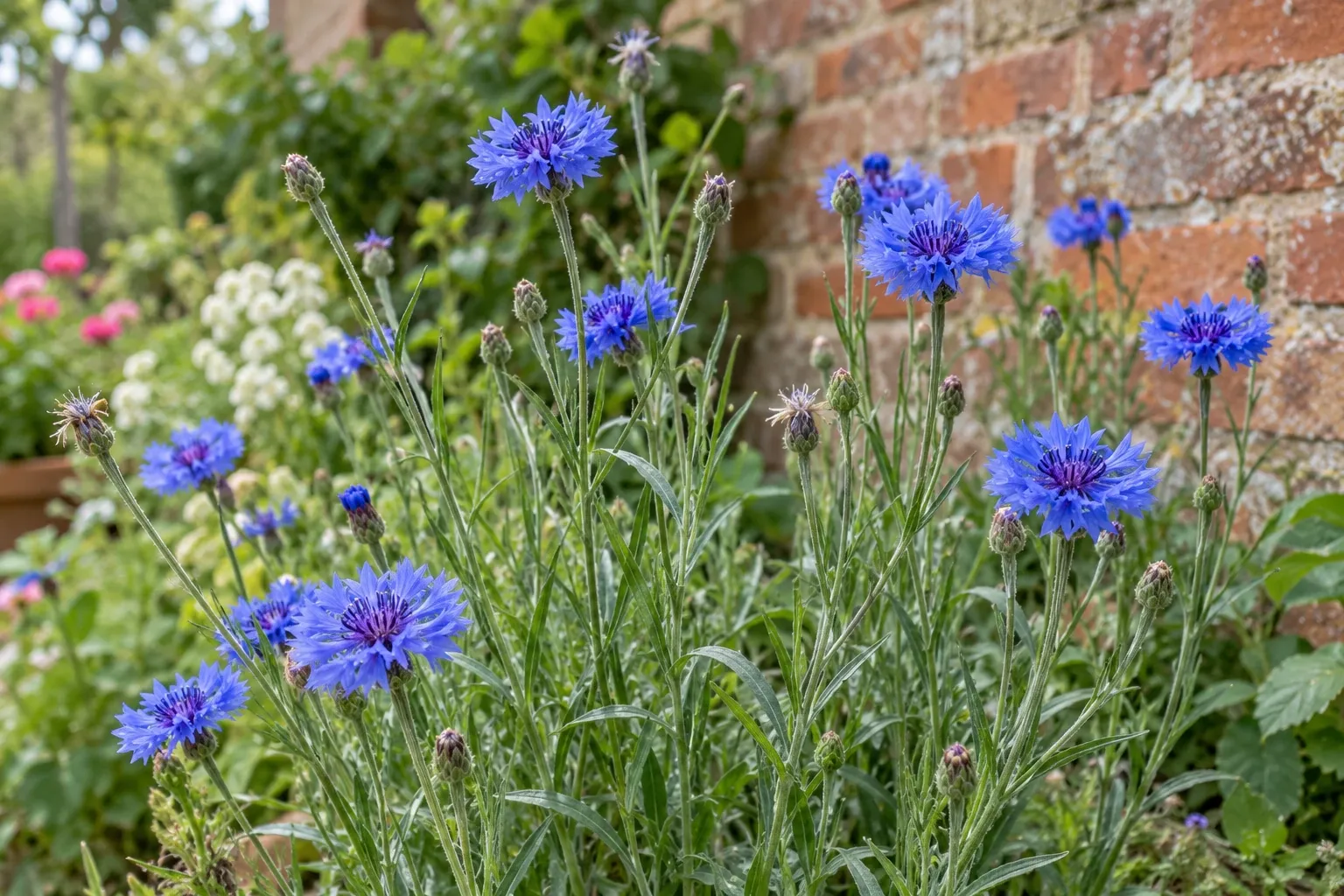
A packet labelled “cornflower” can leave you wondering whether to expect a summer annual or a plant that returns year after year. For the familiar annual, Centaurea cyanus, the main decisions are where to sow, how much space to leave and whether to let seed heads mature. Your local spring weather matters too: sowing times are useful guides, not guarantees, especially where cold or wet conditions linger.
Which cornflower are you growing?
The classic annual cornflower is Centaurea cyanus. It grows from seed, flowers and sets seed within one growing season, so it suits a temporary summer display in an open bed, a gap in a border or a large container. The flowers are commonly blue, though seed mixes and cultivars may include other colours. Check the botanical name on the packet: “cornflower” is also used for Centaurea montana, a perennial with a clump-forming, spreading habit.
That difference affects your plan. The RHS describes C. montana as a perennial reaching 0.1–0.5 metres high and spreading 0.5–1 metre, with flowers about 5 cm across. It suits a place where it can remain and expand, rather than a small annual display that you renew from seed. For a different kind of lasting foliage colour in a border, grow coral bells in a suitable spot. If you are new to planning beds and choosing plants for their conditions, start with the basics of garden care.
Where will annual cornflowers do well?
Choose a spot that receives plenty of sun and has soil that drains rather than remaining waterlogged. Cornflowers are a practical choice for a sunny border, an informal patch or a cut-flower area, but the taller stems can be less stable in exposed places. Consider the mature height when positioning them: the RHS gives a general height range of 30–90 cm for C. cyanus and a spacing range of 23–45 cm for hardy annuals, including cornflower. The exact result depends on the variety and growing conditions.
A small garden does not need a large wildflower meadow to make room for cornflowers. A short row at the back of a sunny bed can add height, while a container can keep the planting contained. In pots, use a container with drainage holes and avoid crowding the plants. The available depth and volume of compost will affect how often you need to check water, particularly during dry, breezy weather. Follow the seed packet if its instructions differ for the cultivar you have bought.
When should you sow cornflower seed?
For spring sowing, the RHS recommends sowing from March to May, with flowering expected from June to September. These are UK gardening guide dates, not a promise that every garden will follow the same timetable. A colder northern or exposed garden may warm later than a sheltered southern one, and a wet spring can make it difficult to prepare soil without compacting it. Wait until you can work the ground into a fine, crumbly surface rather than sowing into saturated soil.
You can also consider autumn sowing. The RHS lists cornflower among hardy annuals suitable for autumn sowing and notes that autumn sowings may need protection from hard frosts but can flower earlier than spring sowings. Conditions differ across the UK, so use the seed packet and local weather as your guide. Where winter is severe or the site is exposed, spring sowing is the simpler option. For a wider overview of hardy annuals, the RHS gives a cornflower height range of 30–90 cm and spacing of 23–45 cm in its autumn sowing advice.
How do you sow and space them?
Direct sowing avoids moving young plants later. First remove weeds and large stones from the patch, then rake the surface until it is level and crumbly. The RHS cornflower instructions advise making drills 12 mm deep, with rows about 30 cm apart. Sow the seed, cover it with soil and water gently so that the seed is not washed out. Mark the row so you can tell emerging cornflowers from weeds.
Once seedlings are large enough to handle, thin crowded growth to about 30 cm apart, as the RHS instructions advise. Thinning means removing some seedlings so the remaining plants have room to grow. It can feel wasteful when many seeds germinate, but leaving every seedling in a dense row creates competition for light, water and space. If you are sowing into a small pot, the same principle applies: keep fewer plants rather than trying to retain every seedling.
The RHS gives the sowing window, depth, row spacing and thinning distance in its cornflower growing instructions. Treat the measurements as a useful starting point, and check your packet for any variety-specific directions. A single thin sowing is easier to thin than a thick scattering of seed.
What care do cornflowers need?
Keep the soil from drying out while seeds are germinating and seedlings are establishing. After that, water according to rainfall, soil and container conditions. A bed in the ground may need less frequent attention than a pot, which can dry quickly in sun or wind. Water the soil gently around the plants rather than repeatedly soaking the flowers. Avoid trying to compensate for poor drainage by watering more often.
Weed while seedlings are small, because weeds can obscure the row and compete for growing space. Once the cornflowers are established, check whether stems need support, particularly if they are tall, crowded or exposed to wind. Avoid feeding by default: the RHS advises against sowing hardy annuals into soil that is too rich, since this can favour leafy growth at the expense of flowers. If your ground is already fertile, focus on preparing a clean seedbed rather than adding fertiliser automatically.
How can you tell whether the planting worked?
Look for seedlings emerging in the marked row, then check whether the thinned plants have room around them. Flowering should follow the season and conditions, so compare progress with the sowing period on the packet rather than expecting every seed to develop at once. If a row is patchy, possible causes include uneven sowing, seed washing away, competition from weeds or unsuitable soil conditions. You can fill a gap with a later sowing if there is still enough of the growing season for the plants to develop.
For a tidy display, remove faded flower heads before seed forms. If you want the plants to self-seed, leave some heads to ripen and shed seed instead. Keep the patch in view so seedlings are not accidentally hoed out the following year. If annual cornflowers are not what you intended, check the label: C. montana is the perennial option, with a much wider mature spread, and needs a different place in the planting plan. The RHS recommends C. montana for moist but well-drained soil in sun or partial shade, and says it needs staking and regular deadheading to prolong flowering, as described in its perennial cornflower profile.